Find, count and read what is in the frame
Objects located and counted, plates and text read, and faces matched only where people have agreed to it.
Discuss it with us[00] Computer Vision & Object Recognition
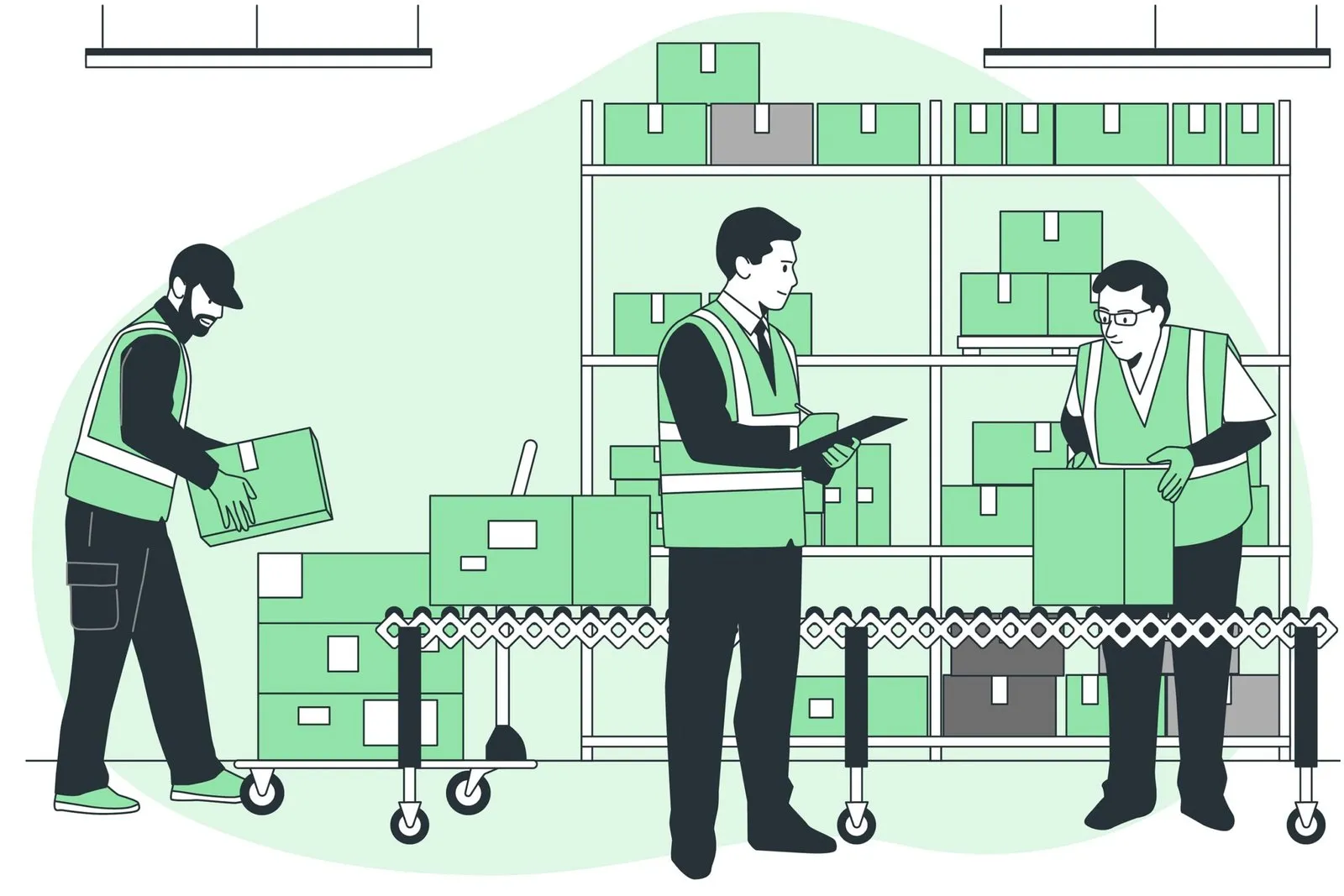
We build computer vision systems that recognise what matters in your images and video, from defects on a line to plates at a gate or text on a label. Models are trained and tested on footage from your own cameras and run in the cloud, on-premises or on edge devices.
What we deliver
Detection finds where objects are, recognition says what they are and segmentation outlines them exactly. We choose the approach and model, from YOLO-family detectors to segmentation and OCR models, built with PyTorch, TensorFlow and OpenCV, then optimise it for the hardware it has to run on.
Accuracy depends on your data more than the algorithm. Lighting, camera angle, rare defects and look-alike products all matter, so we start by reviewing sample images, agree how results will be measured, and test on footage the model has never seen before anything goes live.
Objects located and counted, plates and text read, and faces matched only where people have agreed to it.
Discuss it with usLocate and count products, vehicles, people, animals or parts in images and live video, with bounding boxes and a confidence score for each.
Read vehicle plates for parking, gated access, tolling and yard management, trained on the plate formats used in your region.
Extract text from documents, labels, meters, containers and screens in several languages and fonts, with fields mapped into your system.
Face matching for access control and attendance where people have agreed to it, with face blurring, on-device processing and minimal storage options.
Defects flagged for a person to check, areas and sizes measured to the pixel, and alerts when safety rules are broken.
Discuss it with usSpot scratches, dents, missing parts, wrong labels and packaging faults on production lines, and flag items for a person to check.
Pixel-level outlines to measure area, size or coverage, such as the damaged area on a vehicle panel or the spread of disease on a crop.
Detect missing safety gear, people in restricted zones, smoke or spills, and send an alert with the image to the right person.
Models compressed for edge devices, CCTV servers or a mobile app, with results and image evidence sent to your own systems.
Discuss it with usModels compressed and converted with ONNX or TensorRT to run on NVIDIA Jetson devices, existing CCTV servers or inside a mobile app.
Results saved with their image evidence, shown in a dashboard and sent to your own systems through APIs, webhooks or messages.
which approach fits
Counting boxes, spotting a scratch and reading a meter are different problems with different models and data needs. We pick the approach from your sample images, and say so when a barcode or sensor already does the job.
Count or locate stock, vehicles, people or parts
images it needs: A few hundred labelled images per class from your own cameras
we build: An object detector, such as a YOLO-family model, tuned to your scenes
Object detection, explainedPass or fail each product on a line
images it needs: Images of good and faulty items, including the rare defects
we build: Visual inspection that flags doubtful items for a person to check
Visual inspection, explainedMeasure an area, size or coverage
images it needs: Images with the exact outline of each region drawn
we build: A segmentation model that outlines regions to the pixel
Segmentation, explainedRead text on labels, meters, containers or forms
images it needs: Samples of each format, font and language
we build: OCR with the fields mapped into your system; document processing for invoices and forms
Document processing, explainedUnderstand varied images at low volume
images it needs: A handful of examples, no training set
we build: A general vision model such as GPT or Gemini, with no training at all
ChatGPT & OpenAI integrationRun in real time on a site with poor internet
images it needs: Footage from your cameras and an edge device on site
we build: A compressed model on an NVIDIA Jetson or your CCTV server
Edge AI, explainedCheck something a barcode or sensor already records
images it needs: Barcodes, weights or sensor readings
we build: A scan or sensor reading. No vision model needed, and we will tell you so.
what the model sees
A vision model finds the objects you care about, reads the text in the frame and traces exact outlines, then sends each result with its image evidence to the system that needs it.
Products, parts, vehicles, people or defects boxed in photos and live video.
Labels, documents, meters and plates read field by field into your systems.
Pixel-level shapes to measure area and check damage, wear or missing parts.
Low-confidence results go to a reviewer, and corrections become training data.
Why it matters
Computer Vision is planned around these outcomes, measured against a baseline we agree with you up front.
Discuss your projectA model checks every item or frame in the same way, instead of a sample checked by a tired person at the end of a shift.
Many projects run on existing CCTV or line cameras, with new hardware only where image quality is not good enough.
Each detection is saved with its image and timestamp, so decisions can be reviewed and disputes settled.
On-device processing, blurring and short retention keep personal images out of places they do not need to be.
How we work
A clear five-step process, so you always know what happens next and what you will get.
Every project starts with a free, no-obligation consultation.
$ appsinai run --pilot-first
We study images or video from your real cameras and conditions to judge what is achievable and what data is missing.
you get feasibility view · data gaps · success measures · fixed quote
we need sample images or a short clip · someone who knows what a defect looks like
We plan which images are needed and label them, or build on your team's labels, keeping a separate set back for testing.
you get labelled dataset · labelling guide · held-out test set
we need footage from each camera and condition · sign-off on the labelling guide
Several approaches are trained and compared on precision, recall and speed on the hardware the model will run on.
you get precision and recall per class · speed on your hardware
we need details of the target hardware
The model runs on one line, store or gate alongside current checks, so its results can be compared with what people find.
you get live results vs people · go / no-go
we need one line, store or gate · staff to compare results
We roll out, monitor accuracy and drift, and retrain with new images as products, lighting or cameras change.
you get rollout · drift monitoring · retraining
we need new images when products or cameras change
↺ results feed the next improvement cycle$
Security & control
Camera footage often shows people, vehicles and private spaces. We agree what is captured, processed and kept before the project starts.
Ask us about securityModels can run on edge devices or your own servers, so video does not need to leave the site. Only results and selected images are sent on.
Faces and plates the task does not need can be blurred, and images are kept only as long as you decide.
For face recognition we design around consent and the data protection rules where you operate, and suggest alternatives where it is not appropriate.
Training images are stored encrypted with access limited to named team members, and returned or deleted at the end of the project if you prefer.
FAQ
Straight answers to what buyers ask us most. Can't find what you need?
Email sales@appsin.ai or call +91-9025555584.
Ask us directlyDetection finds where objects are in an image and draws a box around each one. Recognition, or classification, says what each object is. Most projects use both, and some add segmentation, which outlines the exact shape of each object for measurement.
It depends on how varied your objects and conditions are. A narrow task with fixed cameras can often start with a few hundred labelled images per class, while rare defects or many look-alike products need more. Pre-trained models and augmentation reduce the amount, and we give you a plan after reviewing samples.
Data annotation and labellingWe cannot promise a figure before seeing your data. We agree measures with you, such as precision and recall for each class, and report them on a test set from your own cameras that the model never saw during training. A pilot then confirms performance in live conditions.
Often, yes. Resolution, frame rate, angle and lighting decide whether existing CCTV or line cameras are good enough. We check sample footage first and recommend new cameras or lighting only where they are needed.
For low volumes or varied tasks, a vision-capable model such as GPT or Gemini can read images without training. For high volumes, real-time video or offline sites, a trained detector is faster, cheaper per image and more consistent. We often prototype with the first and move to the second.
The main drivers are the number of object classes, the data collection and labelling effort, the accuracy you need, real-time requirements, the hardware and the number of sites. You get a fixed quote after we review your requirements and sample images.
Estimate your AI project costYou do. On completion and final payment, the trained model weights, training code, labelled dataset and documentation we build for you are handed over, as set out in the contract, so you can retrain or move them as you choose. Third-party and open-source models stay under their own licences.
It can, if the training and test images include those conditions. We collect footage across shifts, seasons and weather, report accuracy separately for difficult conditions, and recommend infrared cameras or extra lighting where the image itself is too poor for any model to read.
Yes. Models can run on an edge device or a server on site, so detection carries on when the connection drops. Results and selected images are stored locally and sent on to your dashboard and systems when the connection returns.
Edge AI, explainedFree PDF brochure
Features, outcomes, delivery process and FAQs in one PDF you can share with your team or management.
Your download should start automatically. If not, use the button.
related
Free consultation
Send a few sample images or a short clip and we will tell you what can be detected reliably, what data is missing and how we would test it.