
[00] What we built
AI products we built ourselves
Our case studies describe client work without naming the client. These are three products we designed and built end to end, so you can see the screens, the AI features, the stack and the architecture behind them.
- 03 products
- 27 AI features
- 26 tools in the stacks
build.log3 products · built in-house
- 01PulseAi CRMSales and marketing CRMself-hosted
- 02Invoice AgentInvoice processing agentagent
- 03HTTTP.INURL-shortening SaaS, livelive
screens show demo data
product 01 · sales and marketing crm
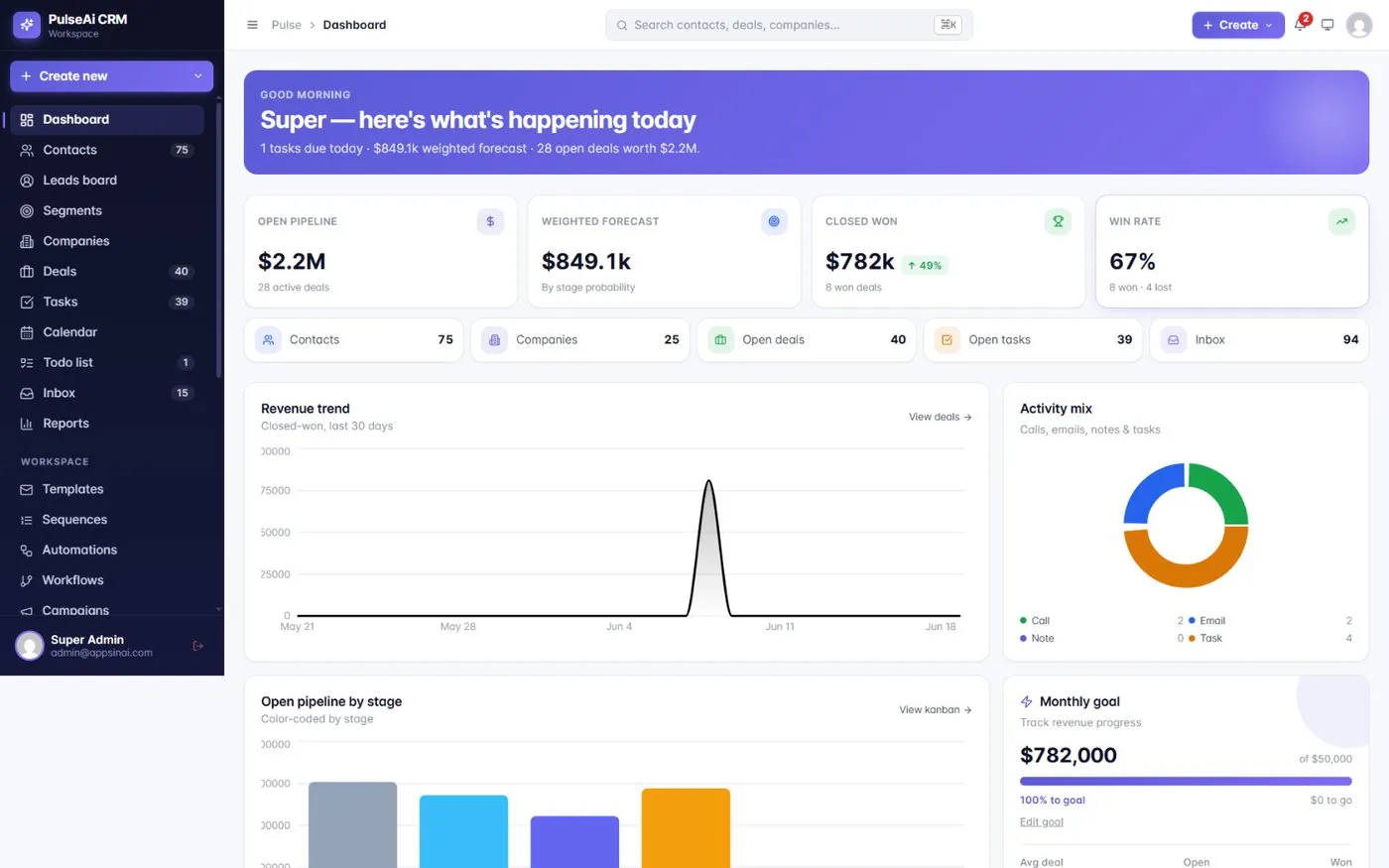
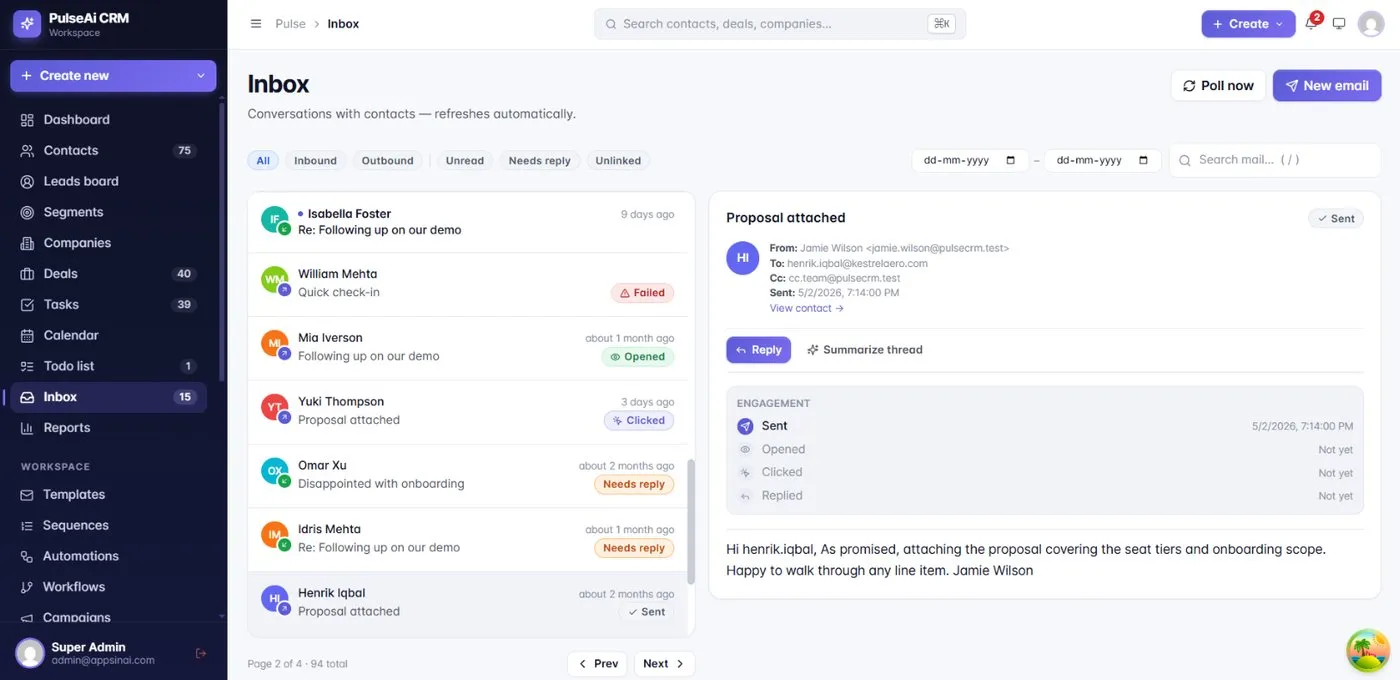
PulseAi CRM. Self-hosted sales and marketing CRM with an AI layer.
A self-hosted sales and marketing CRM with a Python AI layer for drafting emails, scoring and enriching leads, and summarising deals.
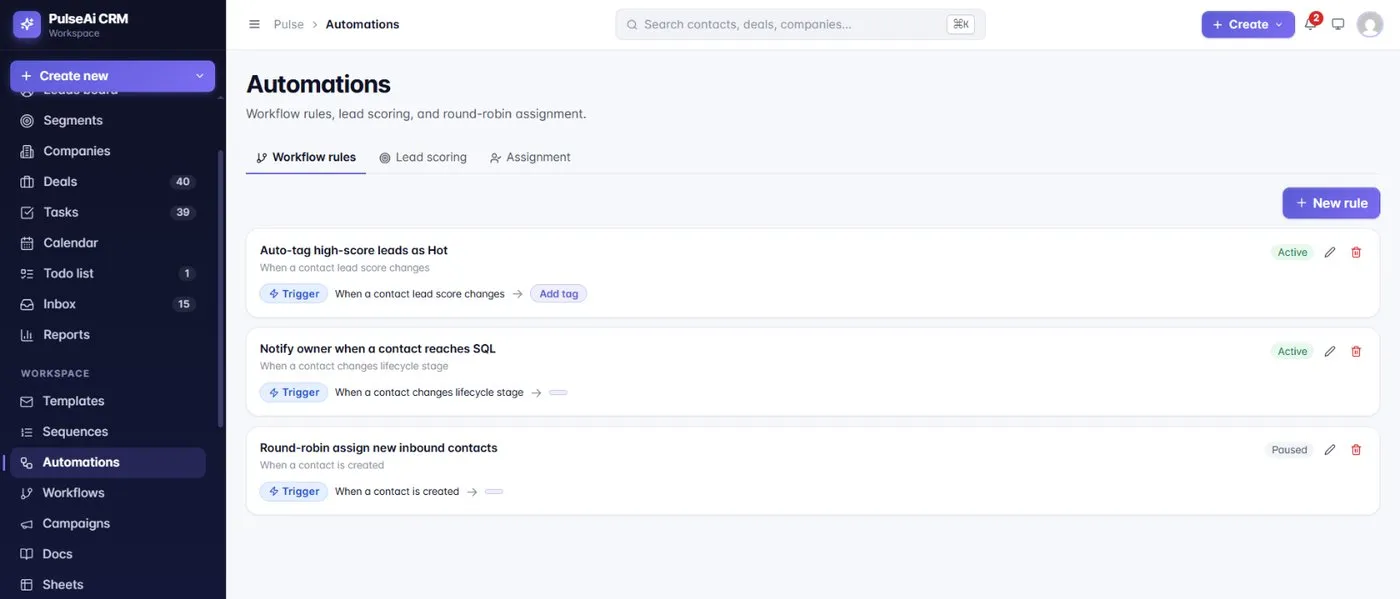
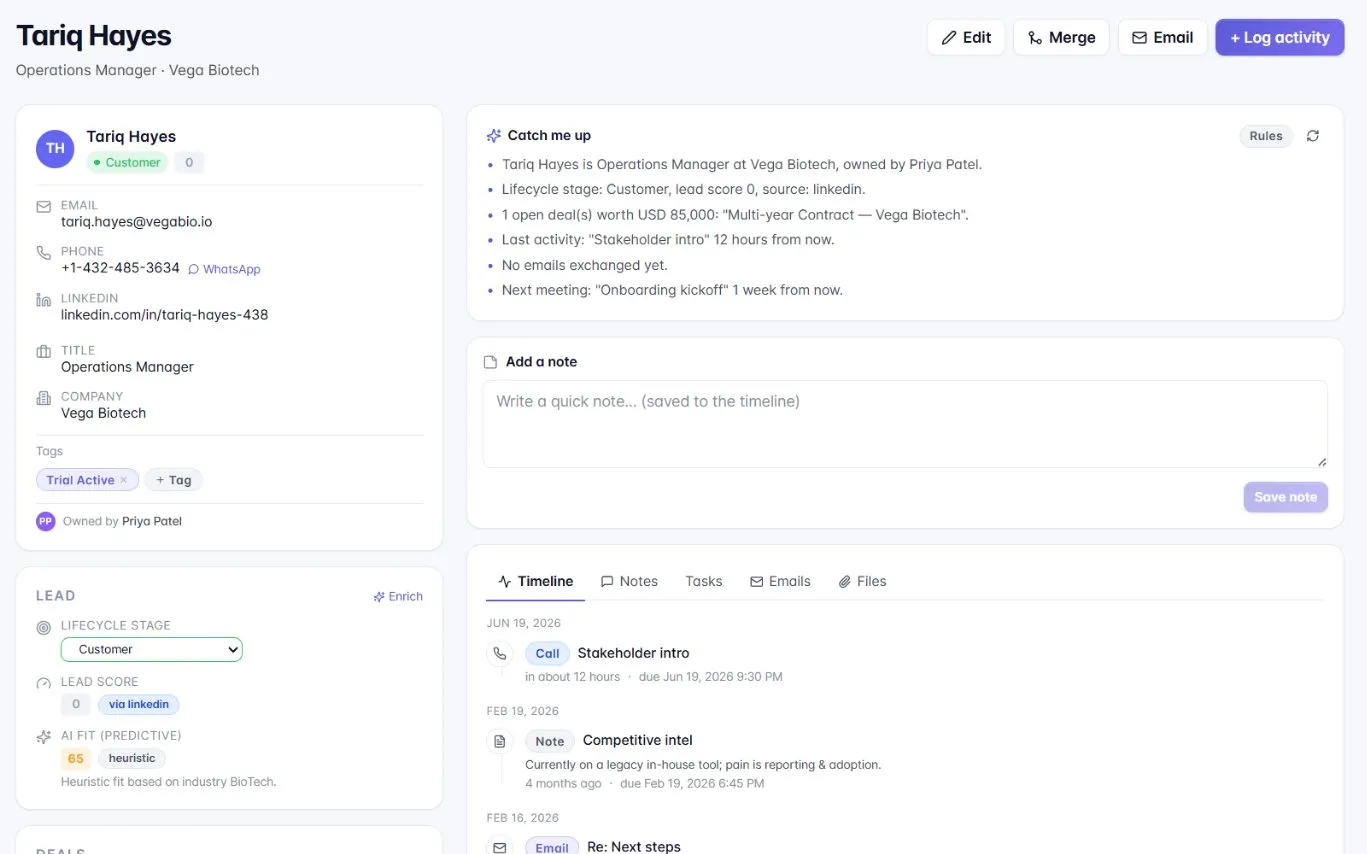
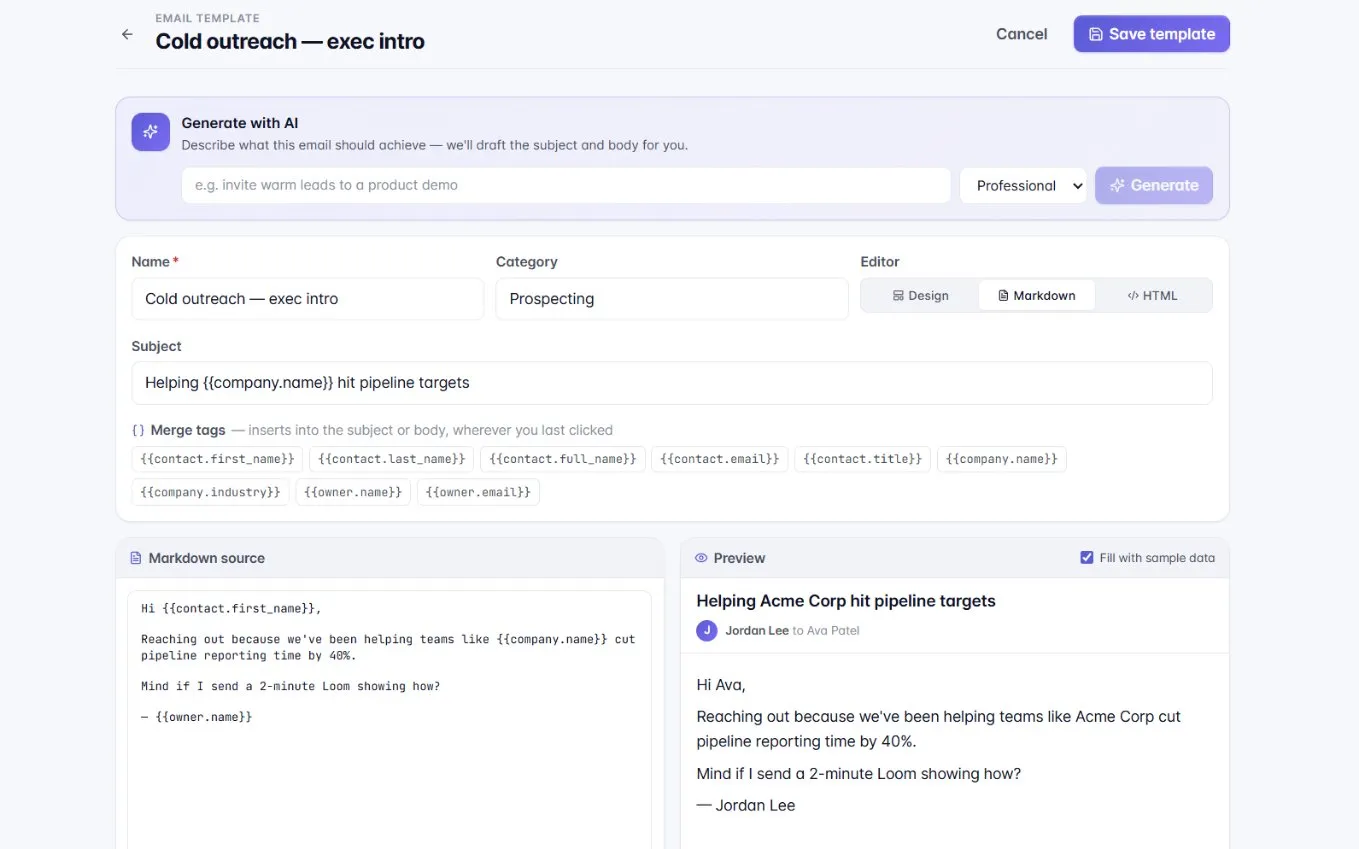
Pulse CRM covers the full revenue lifecycle: leads with firmographic and behavioural scoring, segments and lifecycle stages; contacts, companies and deals on a stale-deal-aware Kanban pipeline; templated email with open and click tracking and send-later scheduling; a visual workflow and automation builder with campaigns; proposals with PDF generation and e-signature hooks; and goals, reports, a command palette, calendar export, audit logs and a duplicate finder.
On top sits an AI layer orchestrated in Python and built for graceful degradation: every AI capability runs through one orchestration layer that calls an LLM when a provider is configured and otherwise falls back to deterministic heuristics, so features work with no API key. Deal health, scores and summaries are computed from the CRM data; the LLM only narrates them, which keeps outputs grounded and auditable.
- Python REST API
- React + TypeScript front end
- Token auth, role-based access
- Async task queue
- Works with no API key
ai features · current and candidate features
- 01AI email drafting from intent and tone
- 02AI reply drafting from a logged thread
- 03Template generation from a plain-language purpose
- 04Draft refinement: shorten, expand, formalise, proofread
- 05Predictive lead scoring with a heuristic fallback
- 06Lead enrichment: company tech stack and firmographics
- 07Conversational lead qualification and auto-routing
- 08"Catch me up" summaries of a contact, company or deal
- 09Deal health and win-probability insights
- 10Inbound email triage and needs-reply classification
- 11Natural-language segment and audience builder
- 12Meeting-note summaries and next-step suggestions
architecture, input to output
- layer.01 data and triggers
- CRM data: contacts, companies, deals
- Emails, notes and activity
- Workflow triggers
- layer.02 orchestration
- LangChain + LangGraph: a stateful agent graph
- Pydantic: typed, validated outputs
- Celery + Redis: enrichment, scoring and triage jobs
- layer.03 model layer
- LLM provider: Claude, OpenAI, Gemini or Ollama
- Deterministic fallback: works with no API key
- pgvector embeddings: semantic search and RAG
- layer.04 features
- Email AI
- Lead and deal AI
- Knowledge AI
built with
- LangChain
- LangGraph
- FastAPI
- LangSmith
- Pydantic
- Anthropic Claude
- OpenAI
- Google Gemini
- Ollama
- Sentence-Transformers
- pgvector
- Celery
- Redis
- scikit-learn
- PostgreSQL
- React
the services behind it
product 02 · invoice processing agent
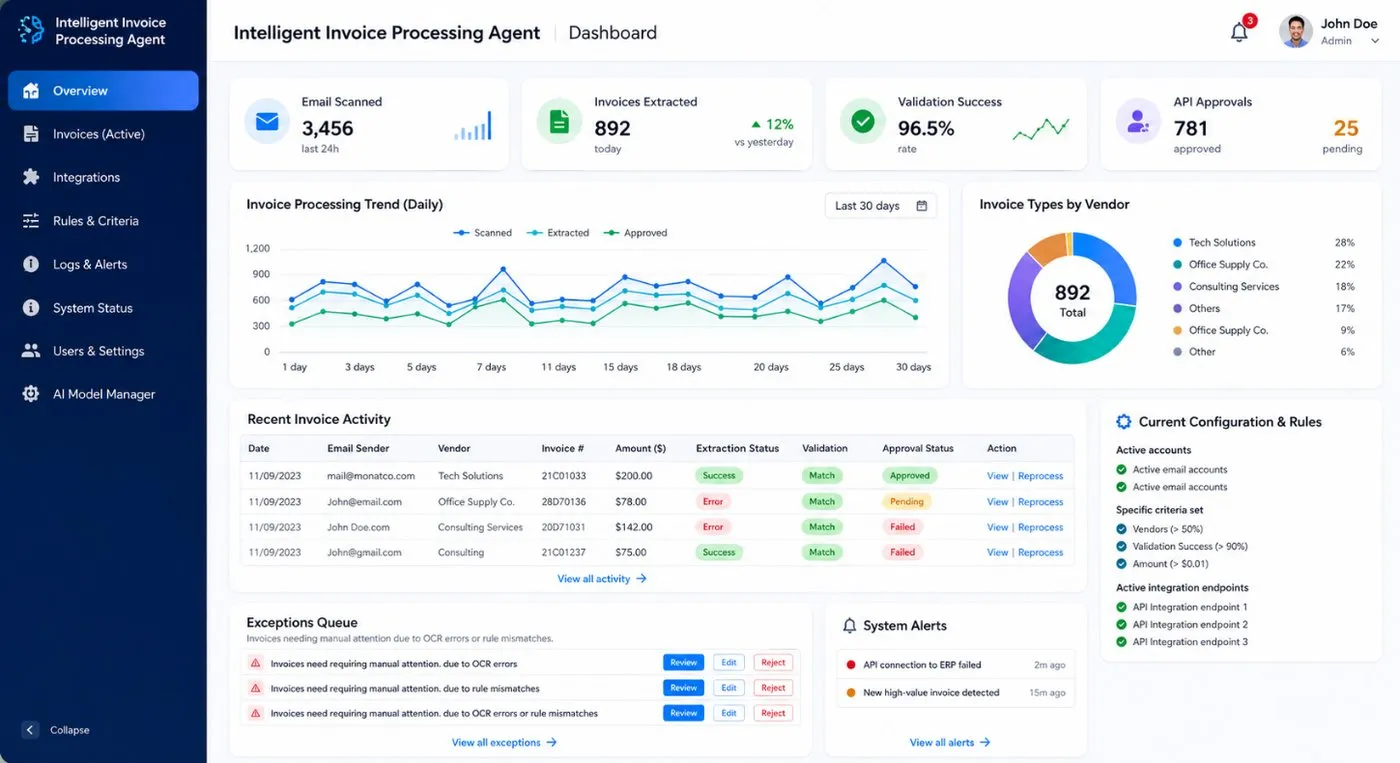
Invoice Agent. AI-powered invoice processing agent.
Invoice automation that turns incoming emails into validated business transactions through OCR, AI extraction and workflow integration.
The agent monitors a Gmail or Outlook inbox, identifies invoice attachments, extracts the invoice data with OCR and an LLM, validates each invoice against configurable rules, and uploads approved invoices to the ERP or accounting system through its API. Exceptions go to a review queue, and every step is logged.
It is built as a Python service with FastAPI and PostgreSQL, a React dashboard for monitoring and rules, AWS Textract or Tesseract for OCR and OpenAI GPT models for extraction, and deploys with Docker.
- Gmail, Outlook and IMAP inboxes
- OCR + LLM extraction
- Configurable validation rules
- ERP and accounting upload
- Audit logs
ai features
- 01Email inbox monitoring: Gmail, Outlook, IMAP
- 02Invoice detection and extraction from attachments
- 03OCR and AI-powered data processing
- 04Configurable validation rules
- 05Automated approval workflow
- 06Third-party API integration with ERP and accounting systems
- 07Error handling and notifications
- 08Audit logs and tracking
architecture, input to output
- layer.01 inbox
- Gmail API
- Outlook API
- IMAP
- layer.02 detect and extract
- Invoice attachment detection
- OCR: AWS Textract or Tesseract
- Field extraction with an LLM
- layer.03 validate and approve
- Configurable validation rules
- Approval workflow
- Exceptions queue, errors and notifications
- layer.04 deliver and audit
- Upload to ERP or accounting via API
- Audit logs and tracking
- Monitoring dashboard
reported outcomes
- Manual invoice processing reduced by up to 90%
- Improved accuracy and compliance
- Faster invoice approval and processing cycles
- Seamless integration with ERP and accounting systems
- Real-time monitoring and reporting
- Scales with growing invoice volumes
As reported for the deployment in our portfolio; not a published case study.
built with
- Python
- FastAPI
- OpenAI GPT
- AWS Textract
- Tesseract OCR
- PostgreSQL
- React
- IMAP
- Gmail API
- Outlook API
- Docker
the services behind it
product 03 · url-shortening saas, live
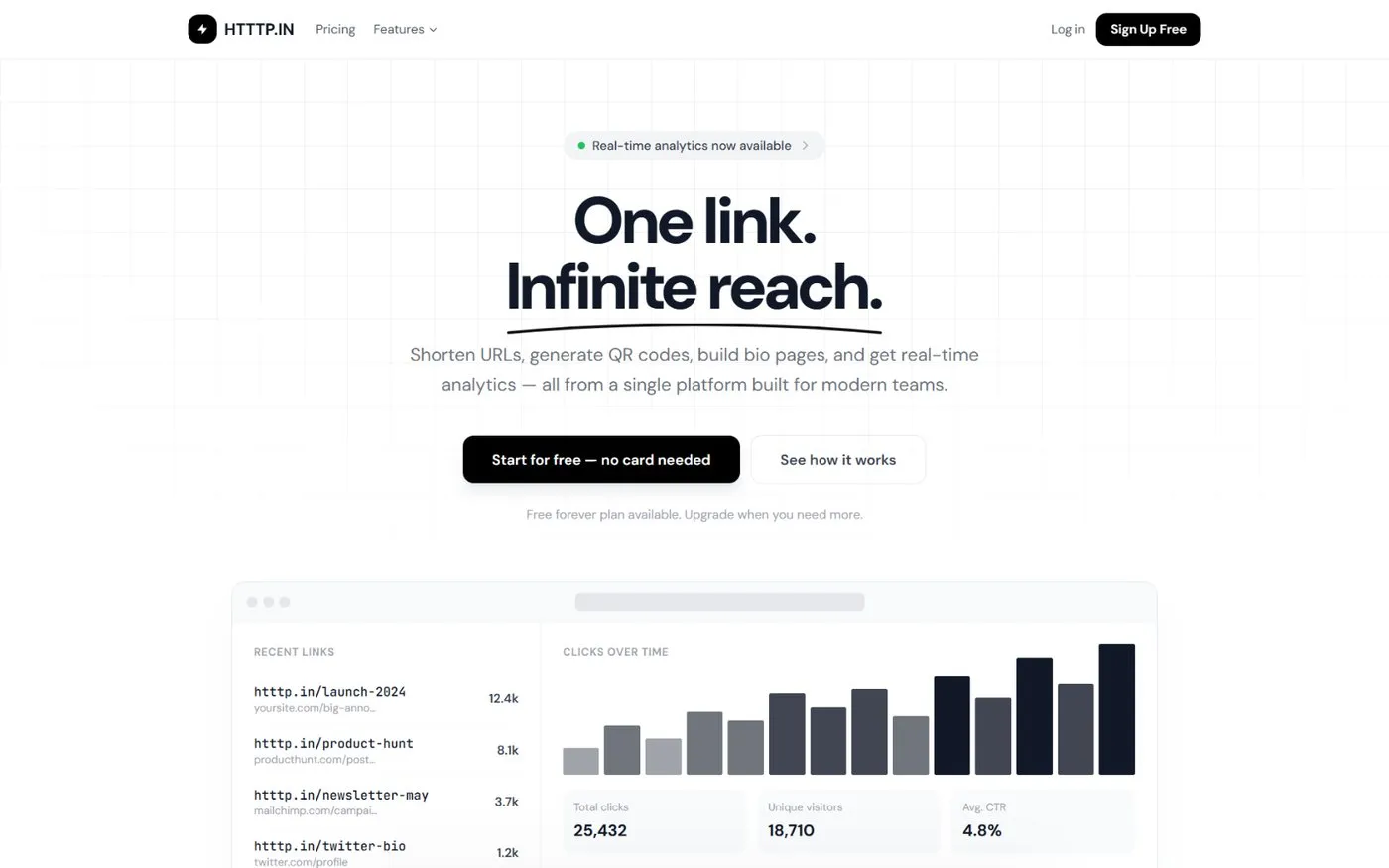
HTTTP.IN. URL-shortening SaaS with an AI layer, live at htttp.in.
Shorten URLs, generate QR codes, create bio pages and track every click with real-time analytics, with an AI layer on top.
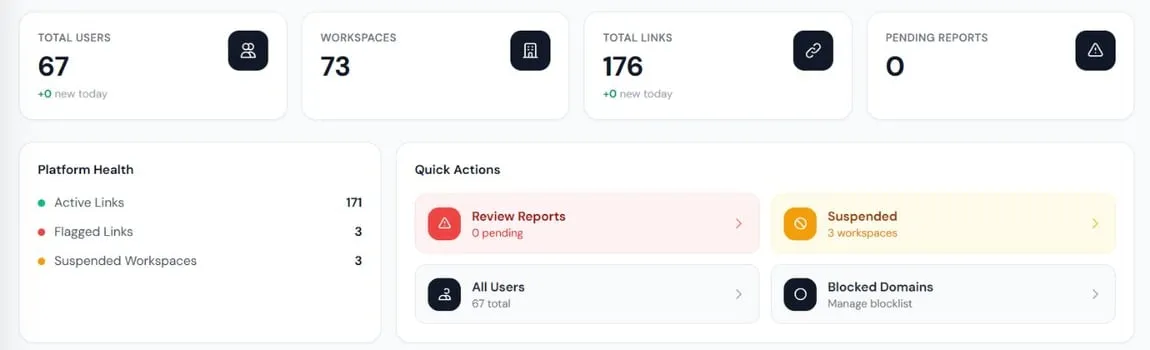
Visit htttp.inHTTTP.IN is a full-featured, self-hosted URL-shortening SaaS: custom aliases, expiry by date or click count, bulk CSV import and Safe Browsing scans, styled QR codes, link-in-bio pages, one-time secret sharing with AES-256 encryption, and click analytics by country, city, device, browser and referrer, plus geo and device targeting, A/B testing, link rotation and retargeting pixels.
The backend is FastAPI over PostgreSQL with pgvector, with Celery and Redis for background jobs; the front end is React with TypeScript; billing runs on Stripe and sign-in on JWT and OAuth2 with two-factor codes. It is multi-tenant with teams, roles and custom domains, and deploys with Docker Compose.
- Live at htttp.in
- Multi-tenant: teams, roles, custom domains
- Stripe billing
- Docker Compose deployment
ai features
- 01AI phishing and malware detection on every new link
- 02Smart alias suggestions from the destination page
- 03Natural-language analytics chat: "why did clicks spike?"
- 04Predictive click forecasting and traffic anomaly detection
- 05Bio pages and QR designs generated from a prompt
- 06A weekly performance digest written in plain language
- 07Natural-language link creation: "shorten X, expire Friday"
architecture, input to output
- layer.01 backend, data and events
- FastAPI backend: ingests link events
- PostgreSQL + pgvector: data and embeddings
- Redis + Celery: async task queue
- layer.02 ai orchestration
- LangGraph: stateful agents
- LangChain: tools and RAG
- Claude API and embeddings: reasoning, classification, vector search
- layer.03 ai features
- Threat scanner
- Smart aliases
- Analytics chat
- Click forecast
- Bio and QR studio
built with
- FastAPI
- PostgreSQL
- pgvector
- Celery
- Redis
- LangChain
- LangGraph
- LangSmith
- Anthropic Claude
- Pydantic
- scikit-learn
- XGBoost
- React
- Stripe
- Docker
the services behind it
What carries over
The same team builds yours. Four habits from these products that we bring to client work.
- 01
Facts first, then the model
In PulseAi CRM, scores, deal health and summaries are computed from the CRM data and the model only explains them, so every answer can be traced back to a record.
- 02
Any model, or none
One orchestration layer calls Claude, OpenAI, Gemini or a local model through Ollama, and falls back to deterministic rules when no provider is configured.
- 03
People approve what matters
The Invoice Agent validates every invoice against rules you set, sends exceptions to a review queue and logs every step before anything reaches the ERP.
- 04
Built to run, not to demo
Background queues, monitoring dashboards, role-based access and Docker deployments, and one product running live as a multi-tenant SaaS at htttp.in.