[00] Article
How an AI Development Company Helps Enterprises Scale Faster
Transform your business with a leading AI development company for enterprises. Build custom AI solutions, automation tools, and intelligent software.
by AppsInAidate read 13 minupdated
on this page11
- 01AI Development Company for Enterprises: Building Scalable AI Solutions for Business
- 02Why Enterprises Need AI to Scale
- 03What an AI Development Company Does
- 04Key Ways AI Helps Enterprises Scale Faster
- 05Industries Benefiting from AI Development Services
- 06Benefits of Partnering with an AI Development Company
- 07Key AI Technologies Used for Enterprise Scaling
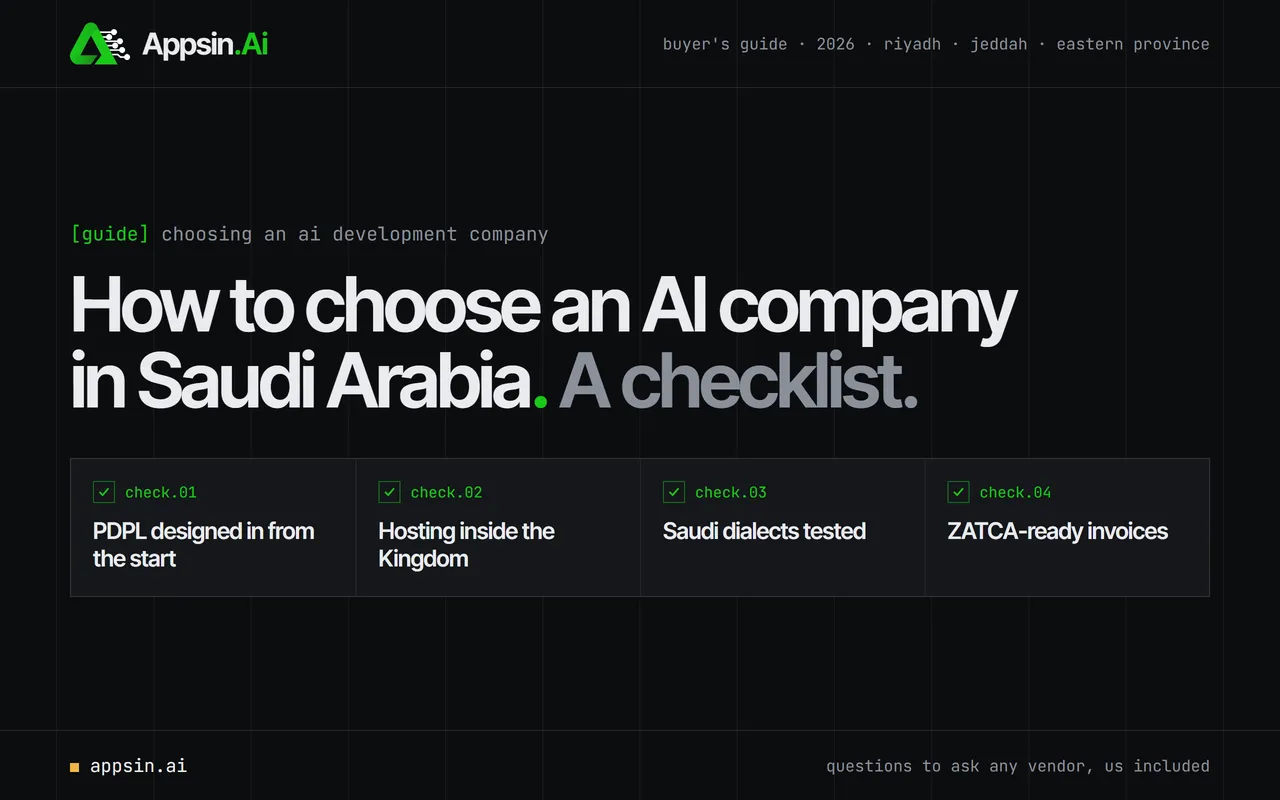
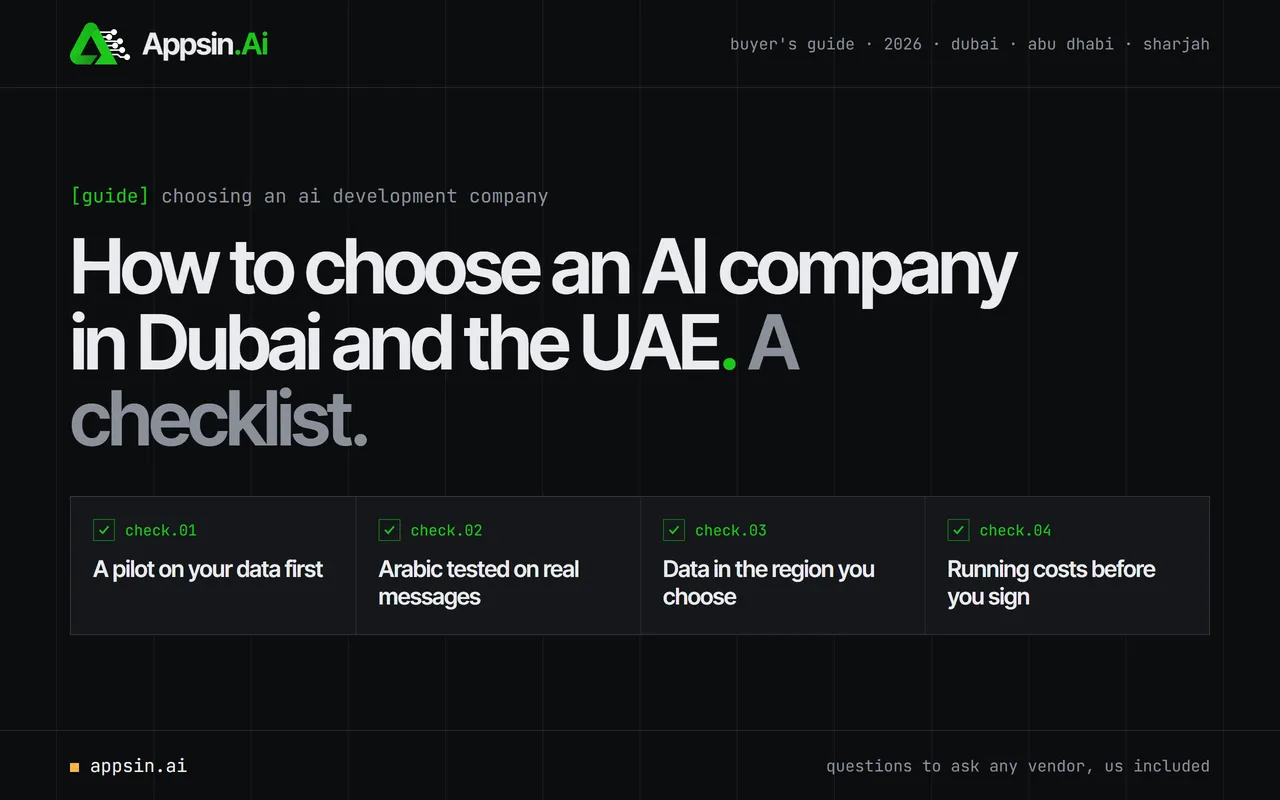
- 08How to Choose the Right AI Development Company
- 09Common Challenges Enterprises Face with AI Adoption
- 10Future of AI in Enterprise Growth
- 11Conclusion
AI Development Company for Enterprises: Building Scalable AI Solutions for Business
Enterprises today face growing pressure to scale operations faster, improve efficiency, and stay competitive in rapidly changing markets. Traditional growth methods often involve higher costs, manual processes, and longer timelines. This is where an AI development company for enterprises can make a major difference. By leveraging technologies like machine learning, automation, predictive analytics, and intelligent customer support, businesses can streamline operations, improve decision-making, and accelerate growth. Partnering with the right AI development company helps enterprises adopt scalable solutions that support long-term success and digital transformation.
Why Enterprises Need AI to Scale
An AI Development Company for Enterprises helps businesses scale faster by creating intelligent solutions that improve efficiency, reduce costs, and support growth. As enterprises expand, managing operations, customer service, data, and decision-making becomes more complex. Traditional systems often struggle to keep up with these demands.
An enterprise AI partner provides custom AI solutions such as workflow automation, predictive analytics, chatbots, recommendation engines, and machine learning models. These technologies help enterprises automate repetitive tasks, improve accuracy, and make faster business decisions.
Enterprises also rely on AI to improve customer experiences, optimize supply chains, manage resources, and analyze large volumes of business data. By partnering with an AI development company, organizations can implement scalable technologies that support long-term growth without significantly increasing operational costs.
With the right AI strategy, enterprises can stay competitive, adapt to changing market conditions, and achieve faster digital transformation.
What an AI Development Company Does
An AI development company helps enterprises design, build, and implement intelligent solutions that solve operational challenges and support growth. These companies provide end-to-end AI services that help enterprises improve efficiency, automate processes, and make better business decisions.
Some of the key services offered by an AI development company include:
- AI consulting and strategy development to identify the right opportunities for AI adoption
- Custom AI solution development based on business goals and industry requirements
- Machine learning model creation for forecasting, personalization, and predictive analytics
- Chatbot and virtual assistant development for customer support and engagement
- Process automation to reduce manual work and improve productivity
- Computer vision solutions for image recognition, quality control, and monitoring
- Natural language processing for analyzing text, detecting sentiment, and managing documents
- AI integration with existing enterprise systems such as CRM, ERP, and cloud platforms
- Data analytics and reporting tools for real-time business insights
- Ongoing support, optimization, and maintenance to ensure long-term performance
By partnering with an AI development company, businesses can access expert guidance, advanced technologies, and scalable solutions that help them grow faster and stay competitive.
Key Ways AI Helps Enterprises Scale Faster
1. Automates Repetitive Business Tasks
An AI development company can help enterprises automate routine tasks such as data entry, invoice processing, report generation, scheduling, and customer support. This reduces manual effort, saves time, and allows employees to focus on higher-value work.
2. Improves Decision-Making
AI can analyze large amounts of business data in real time and provide valuable insights. Enterprises can use AI to identify trends, forecast demand, understand customer behavior, and make faster, data-driven decisions.
3. Enhances Customer Experience
Enterprises can use AI to build chatbots, recommendation systems, and personalized customer experiences. These tools help businesses provide faster responses, 24/7 support, and more relevant product or service suggestions.
4. Increases Operational Efficiency
AI helps optimize supply chain management, inventory tracking, workforce planning, and resource allocation. By improving operational efficiency, enterprises can scale their business without significantly increasing costs.
5. Supports Predictive Analytics
AI leverages historical data to forecast future outcomes. Enterprises can use predictive analytics to forecast sales, identify risks, reduce downtime, and improve business planning.
6. Reduces Costs
By automating processes and improving efficiency, AI helps enterprises lower operational expenses. Businesses can reduce labor costs, minimize errors, and avoid unnecessary spending.
7. Enables Scalable Growth
AI solutions can be designed to grow with the business. As customer demand increases, AI systems can handle larger workloads, more data, and higher levels of customer interaction without requiring major infrastructure changes.
8. Strengthens Competitive Advantage
AI helps enterprises stay ahead of competitors by improving speed, innovation, and decision-making. Businesses that adopt AI early can respond faster to market changes and deliver better customer experiences.
Industries Benefiting from AI Development Services
Healthcare
AI helps healthcare organizations improve patient care, automate administrative tasks, support diagnosis, and manage medical records more efficiently. AI is also used for predictive analytics, medical imaging, and virtual health assistants.
Retail and E-commerce
Retail businesses use AI for personalized recommendations, customer support chatbots, inventory management, demand forecasting, and sales analysis. AI can help retailers improve customer experiences and increase conversions.
Manufacturing
Manufacturers use AI to improve production efficiency, monitor equipment performance, reduce downtime, and automate quality control. Predictive maintenance and smart factory solutions are becoming increasingly important for large-scale manufacturing operations.
Finance and Banking
Banks and financial institutions use AI for fraud detection, risk management, credit scoring, customer support, and financial forecasting. AI helps financial enterprises improve security, speed, and decision-making.
Logistics and Transportation
AI supports route optimization, fleet management, warehouse automation, delivery tracking, and supply chain planning. AI can help logistics businesses reduce costs and improve operational efficiency.
Real Estate
Real estate companies use AI for property recommendations, market analysis, customer engagement, and predictive pricing. AI-powered tools can help businesses better understand customer preferences and market trends.
Education
Educational institutions and e-learning platforms use AI for personalized learning, automated grading, student performance tracking, and virtual tutors. AI helps improve learning experiences and operational management.
Telecommunications
Telecom companies use AI to improve customer service, detect network issues, predict maintenance needs, and optimize service delivery. AI can also support fraud detection and customer retention strategies.
Insurance
Insurance companies benefit from AI through faster claims processing, fraud detection, customer support automation, and risk assessment. AI helps insurers improve accuracy and reduce operational delays.
Human Resources
HR teams use AI for resume screening, recruitment automation, employee engagement, workforce planning, and performance analysis. AI can help businesses streamline talent management processes.
Benefits of Partnering with an AI Development Company
Access to Expert Knowledge
An experienced AI development company brings specialized expertise in machine learning, automation, predictive analytics, natural language processing, and other advanced technologies. Businesses can benefit from experienced professionals without building a large in-house AI team.
Faster Project Development
Developing AI solutions internally can take significant time and resources. Partnering with an experienced AI team helps speed up the entire process, from planning and development to deployment and support.
Custom AI Solutions
Every enterprise has unique goals and operational challenges. A good AI partner creates customized AI solutions that align with specific business needs, industry requirements, and growth objectives.
Reduced Operational Costs
AI helps automate repetitive tasks, reduce human errors, and improve efficiency. This allows enterprises to lower operational costs while maintaining high productivity and service quality.
Improved Business Decisions
AI-powered analytics provide valuable insights into customer behavior, sales trends, market conditions, and operational performance. These insights help enterprises make smarter and faster decisions.
Better Customer Experience
An AI partner can build chatbots, virtual assistants, recommendation engines, and personalization tools that improve customer engagement and satisfaction.
Scalable Technology Solutions
AI systems can handle increasing amounts of data, users, and business processes as the company grows. This allows enterprises to scale without constantly investing in additional resources or infrastructure.
Competitive Advantage
Businesses that adopt AI early can improve efficiency, innovate faster, and stay ahead of competitors. Partnering with the right AI company helps organizations respond quickly to market changes and customer demands.
Ongoing Support and Optimization
AI solutions require continuous monitoring, updates, and improvements. A long-term AI partner provides ongoing support to ensure the technology performs effectively and adapts to future business needs.
Key AI Technologies Used for Enterprise Scaling
Machine Learning
Machine learning helps enterprises analyze data, identify patterns, and make predictions. Enterprises use machine learning to improve forecasting, customer segmentation, fraud detection, and business decision-making.
Natural Language Processing
Natural language processing allows machines to interpret and analyze human language. Enterprises use this technology for chatbots, virtual assistants, sentiment analysis, document processing, and automated customer support.
Computer Vision
Computer vision allows systems to interpret and analyze images and videos. Enterprises can use computer vision for facial recognition, quality inspection, object detection, surveillance, and medical image analysis.
Predictive Analytics
Predictive analytics leverages past data and AI to anticipate future trends. Enterprises use predictive analytics to predict sales, customer behavior, equipment maintenance needs, and business risks.
Robotic Process Automation
Robotic Process Automation helps automate repetitive and rule-based tasks such as data entry, invoice processing, payroll, and reporting. This improves efficiency and reduces operational costs.
Generative AI
Generative AI helps enterprises create content, automate conversations, generate code, summarize information, and improve customer interactions. Businesses use generative AI for marketing, support, product development, and internal operations.
Deep Learning
Deep learning is a more advanced form of machine learning that processes large amounts of data through neural networks. It is commonly used for speech recognition, image analysis, recommendation systems, and autonomous technologies.
Data Analytics
Data analytics helps enterprises collect, organize, and interpret business information. AI-driven analytics tools provide real-time insights, improve performance tracking, and support better decision-making.
Cloud-Based AI Solutions
Cloud-based AI platforms allow enterprises to deploy and scale AI technologies without large infrastructure investments. These solutions provide flexibility, faster implementation, and easier access to AI tools and data.
How to Choose the Right AI Development Company
Check Industry Experience
Choose an AI development company that has experience working in your industry. A company with industry knowledge will better understand your business challenges, customer needs, and compliance requirements.
Review Technical Expertise
Look for a company with strong expertise in machine learning, natural language processing, computer vision, predictive analytics, automation, and cloud technologies. The right partner should have a skilled team capable of building scalable AI solutions.
Evaluate Their Portfolio
Explore previous work, case studies, and client achievements. A company with a strong portfolio can demonstrate its ability to deliver effective solutions for different business needs.
Understand Their Development Process
A reliable AI partner should have a clear development process that includes consultation, planning, data preparation, model development, testing, deployment, and ongoing support. This helps ensure the project runs smoothly from start to finish.
Focus on Customization
Every enterprise has different goals and requirements. Choose a partner that offers customized solutions instead of one-size-fits-all products. Custom AI tools provide better results and long-term value.
Check Scalability Options
Make sure the company can build AI systems that grow with your business. Scalable AI solutions can handle increasing data volumes, users, and operational complexity without major disruptions.
Ask About Integration Capabilities
The AI solution should integrate easily with your existing systems such as CRM, ERP, cloud platforms, and business applications. Smooth integration reduces implementation challenges and improves overall efficiency.
Evaluate Communication and Support
Strong communication is essential for successful AI projects. Choose a company that provides regular updates, transparent reporting, and ongoing support after deployment.
Consider Pricing and ROI
While cost matters, the lowest price isn’t always the best choice. Compare pricing models, project timelines, and expected return on investment. The right partner should offer value through quality, expertise, and measurable business impact.
Look for Long-Term Partnership Potential
AI is an ongoing process that requires regular improvements and updates. Select a company that can become a long-term technology partner and continue supporting your business as it grows.
Common Challenges Enterprises Face with AI Adoption
High Initial Investment
One of the biggest challenges enterprises face is the upfront cost of AI implementation. Building AI models, upgrading infrastructure, and hiring skilled professionals can require significant investment. However, partnering with an experienced AI development company can help reduce costs through strategic planning and scalable solutions.
Poor Data Quality
AI systems rely heavily on accurate and well-organized data. Many enterprises struggle with incomplete, outdated, or inconsistent data, which can reduce the effectiveness of AI models and lead to poor decision-making.
Integration with Existing Systems
Many businesses use older systems that may not easily connect with modern AI technologies. Integrating AI into existing CRM, ERP, and operational platforms can be complex and time-consuming without expert support.
Lack of Skilled AI Talent
Hiring experienced AI engineers, data scientists, and machine learning specialists can be difficult and expensive. An external AI development partner gives businesses access to skilled professionals without the need to build a large internal AI team.
Data Privacy and Security Concerns
Enterprises must protect sensitive customer and business information when implementing AI. Concerns about data security, privacy regulations, and compliance can slow down AI adoption if not managed properly.
Resistance to Change
Employees may be hesitant to adopt new AI tools because they fear job displacement or changes to existing workflows. Businesses often need proper training and change management strategies to encourage AI adoption across teams.
Difficulty Measuring ROI
Some enterprises struggle to understand the return on investment from AI projects. Without clear goals and performance metrics, it can be challenging to measure how AI improves productivity, customer satisfaction, or operational efficiency.
Limited AI Strategy
Many companies adopt AI without a clear plan or business objective. This can lead to wasted resources and failed projects. An experienced AI partner helps businesses define goals, prioritize use cases, and create a structured AI roadmap.
Scalability Issues
Some AI solutions work well in small environments but struggle to scale across larger operations. Enterprises need AI systems that can handle growing amounts of data, users, and business demands over time.
Ongoing Maintenance Requirements
AI systems require continuous monitoring, updates, and retraining to remain accurate and effective. Enterprises must be prepared to invest in ongoing support to keep their AI solutions performing at a high level.
Future of AI in Enterprise Growth
The future of AI promises to transform how enterprises grow, compete, and operate. An AI development company plays a key role in helping businesses prepare for and leverage these advancements.
1. Autonomous AI Agents
Enterprises will increasingly adopt autonomous AI agents capable of performing complex tasks with minimal human intervention. These agents can manage operations, handle customer interactions, and optimize workflows, enabling faster and more efficient scaling.
2. Hyper-Personalization
AI will allow enterprises to deliver highly personalized experiences to customers, employees, and partners. From tailored product recommendations to customized marketing campaigns, personalization powered by AI will drive engagement and loyalty.
3. AI-Powered Decision Intelligence
AI will move beyond data analysis to provide actionable decision intelligence. Enterprises can predict trends, assess risks, and identify opportunities in real time, helping leadership make faster, smarter strategic choices.
4. Increased Automation Across Industries
Automation will expand into more areas, including supply chain, manufacturing, finance, and HR. By automating repetitive and complex tasks, enterprises can focus resources on innovation and strategic growth initiatives.
5. Integration with Emerging Technologies
AI will increasingly combine with edge computing, multimodal models, and real-time data platforms. These combinations will enable smarter operations, enhanced customer experiences, and new business models across industries.
6. Generative AI and Creative Solutions
Generative AI will continue to transform content creation, software development, product design, and marketing. Enterprises can innovate faster by generating ideas, code, or visual content at scale.
7. Ethical and Explainable AI
As AI adoption grows, enterprises will prioritize ethical AI and explainable models. Transparent AI systems help build trust with customers, comply with regulations, and ensure fair decision-making.
8. Global Scalability
AI technologies will enable enterprises to scale globally with ease, managing larger datasets, multilingual communication, and diverse customer needs without significantly increasing costs.
Partnering with the right AI development company helps ensure businesses are prepared to adopt these future-ready AI solutions, stay competitive, and achieve sustainable growth in the years ahead.
Conclusion
Partnering with an AI development company is no longer optional – it is a strategic necessity for businesses looking to scale faster and stay competitive. AI empowers enterprises to automate processes, improve decision-making, enhance customer experiences, and optimize operations, all while reducing costs and increasing efficiency.
By leveraging advanced AI technologies such as machine learning, predictive analytics, natural language processing, and generative AI, enterprises can unlock new growth opportunities and respond quickly to changing market demands. Choosing the right AI development partner ensures customized, scalable solutions, ongoing support, and measurable ROI.
In today’s fast-paced business landscape, enterprises that embrace AI early and strategically will gain a significant competitive advantage, drive innovation, and achieve long-term growth. The right AI development company is the key enabler to turn these AI opportunities into real business results.