[00] Article
AI Consulting Services: Building Smarter Strategies for Sustainable Business Growth
Explore AI consulting services to build smarter strategies, automate processes, improve decision-making, and drive scalable business growth with AI.
by AppsInAidate read 7 minupdated
on this page13
- 01AI Consulting Services: Strategy, Solutions & Business Benefits
- 02What Are AI Consulting Services?
- 03Why Businesses Need AI Consulting
- 04Key Benefits of AI Consulting Services
- 05AI Consulting Process
- 06AI Consulting Across Different Industries
- 07AI Consulting and Machine Learning Development
- 08Generative AI Consulting
- 09AI Agents and Intelligent Automation
- 10What to Consider Before Investing in AI
- 11Choosing the Right AI Consulting Company for Your Business
- 12The Future of AI Consulting
- 13Conclusion
AI Consulting Services: Strategy, Solutions & Business Benefits
Artificial intelligence is no longer limited to experimental projects or technology research. Businesses across industries are adopting AI to automate repetitive work, improve decision-making, personalize customer experiences, and uncover new opportunities. However, implementing AI successfully requires more than selecting a model or adding a chatbot to an existing platform.
This is where AI consulting services can make a meaningful difference. An experienced AI consulting partner helps businesses identify practical AI opportunities, define the right technology strategy, select suitable models, and build solutions that align with measurable business objectives.
What Are AI Consulting Services?
AI consulting services help organizations understand how artificial intelligence can be applied to their specific business challenges. Instead of taking a one-size-fits-all approach, consultants evaluate existing processes, technology infrastructure, data, goals, and operational requirements before recommending an AI strategy.
A typical AI consulting engagement may include:
- AI readiness and opportunity assessment
- Business process analysis
- AI strategy and roadmap development
- Machine learning model planning
- Generative AI implementation
- Natural language processing solutions
- Computer vision applications
- AI agent development
- Data strategy and preparation
- AI integration with existing software
- Model deployment and monitoring
- AI governance and optimization
The objective is not simply to introduce AI, but to identify where it can create measurable value.
Why Businesses Need AI Consulting
Many organizations want to adopt AI but struggle to determine where to begin. They may have large volumes of data, outdated workflows, disconnected applications, or multiple potential AI use cases.
Without a clear strategy, AI investments can become expensive experiments with limited business impact.
AI consulting helps businesses prioritize opportunities based on factors such as:
- Expected business value
- Implementation complexity
- Data availability
- Integration requirements
- Security considerations
- Scalability
- Return on investment
For example, a retail company may benefit more from AI-powered demand forecasting than from deploying a generic chatbot. Similarly, a manufacturing business may achieve greater value from predictive maintenance and computer vision than from a customer-facing AI application.
Key Benefits of AI Consulting Services
1. Clear AI Strategy
AI consultants help organizations create a practical roadmap instead of adopting technology without a defined objective. The strategy can cover immediate use cases as well as long-term AI transformation.
2. Better Technology Selection
There are numerous AI models, frameworks, cloud platforms, and development approaches available. Consultants can help businesses select technologies based on performance, cost, scalability, security, and integration requirements.
3. Faster Implementation
A structured consulting process can reduce unnecessary experimentation. By identifying requirements and technical challenges early, businesses can move from an initial concept toward implementation more efficiently.
4. Improved Operational Efficiency
AI can automate repetitive processes, assist employees with complex tasks, classify information, extract insights from documents, and streamline workflows.
5. Data-Driven Decision Making
AI systems can analyze large datasets and identify patterns that may be difficult to discover manually. This can support forecasting, risk analysis, customer insights, and operational planning.
6. Scalable AI Architecture
A successful AI solution should be designed to grow with the organization. Consultants can help establish architectures that support additional users, datasets, integrations, and AI capabilities over time.
AI Consulting Process
A strong AI consulting engagement typically follows a structured process.
Step 1: Business and Technology Assessment
The first stage involves understanding the organization’s business objectives, existing applications, workflows, data sources, and technical infrastructure.
This assessment helps identify areas where AI can realistically provide value.
Step 2: Identify AI Use Cases
Potential use cases are evaluated based on their business impact and technical feasibility. Common opportunities include:
- Predictive analytics
- Intelligent automation
- Recommendation engines
- AI-powered customer support
- Fraud detection
- Document intelligence
- Demand forecasting
- Predictive maintenance
- Personalized marketing
- AI-powered search
Step 3: Develop an AI Roadmap
After identifying the most valuable opportunities, consultants create a roadmap that defines priorities, timelines, technologies, resources, and expected outcomes.
Step 4: Build a Proof of Concept
A proof of concept can demonstrate whether the proposed AI approach works with real-world data and workflows. It allows organizations to validate assumptions before committing to a larger implementation.
Step 5: Development and Integration
Once the concept is validated, the solution can be developed and integrated with existing business applications, databases, APIs, cloud platforms, and internal workflows.
This may involve AI ML Development Services for developing machine learning models, predictive systems, recommendation engines, and other intelligent applications.
Step 6: Deployment and Monitoring
AI systems require ongoing monitoring after deployment. Model performance, data quality, accuracy, security, and operational costs should be reviewed regularly.
Step 7: Continuous Optimization
AI is an evolving technology. Models and workflows can be continuously improved as new data becomes available and business requirements change.
AI Consulting Across Different Industries
AI consulting can be applied to almost any industry where data, automation, and intelligent decision-making can improve business outcomes.
Healthcare
AI can support medical document processing, patient engagement, appointment management, medical image analysis, and operational forecasting.
Retail and E-Commerce
Retailers can use AI for recommendation systems, customer segmentation, inventory forecasting, demand prediction, and personalized shopping experiences.
Manufacturing
Manufacturers can apply AI to predictive maintenance, quality inspection, production optimization, demand forecasting, and supply chain management.
Banking and Finance
Financial organizations can use AI for fraud detection, risk assessment, customer support, document processing, and financial forecasting.
Automotive
AI can support vehicle analytics, dealer management, predictive maintenance, customer personalization, fleet optimization, and intelligent automation.
Logistics
AI-powered systems can improve route optimization, shipment forecasting, warehouse operations, demand planning, and fleet management.
AI Consulting and Machine Learning Development
AI strategy and implementation often require machine learning expertise. Businesses may need custom models trained around their own datasets rather than relying entirely on generic AI tools.
AI ML Development Services can support applications such as classification, forecasting, anomaly detection, recommendation systems, predictive analytics, and intelligent automation.
The right approach depends on the business problem, available data, expected accuracy, deployment environment, and scalability requirements.
Generative AI Consulting
Generative AI has created new opportunities for organizations to improve knowledge management, content generation, customer support, software development, and employee productivity.
Businesses can explore use cases such as:
- Enterprise AI assistants
- Document summarization
- Intelligent search
- Content generation
- AI-powered customer service
- Internal knowledge assistants
- Code generation
- Document question answering
- Workflow automation
However, successful generative AI adoption requires attention to data privacy, model selection, hallucination control, access management, and integration.
AI Agents and Intelligent Automation
AI agents are another emerging area of enterprise AI. Unlike traditional automation, AI agents can interpret information, reason through tasks, interact with tools, and perform multi-step workflows.
Organizations can use AI agents for:
- Customer service
- Sales assistance
- Lead qualification
- Employee support
- Research
- Document processing
- IT operations
- Workflow management
AI consulting can help businesses determine which processes are suitable for agent-based automation and where traditional software automation may be more appropriate.
What to Consider Before Investing in AI
Before starting an AI project, businesses should evaluate several important factors.
Business objective: What problem should the AI solution solve?
Data quality: Is sufficient and reliable data available?
Integration: Can the AI system connect with current business applications?
Security: How will sensitive business information be protected?
Scalability: Can the solution support future growth?
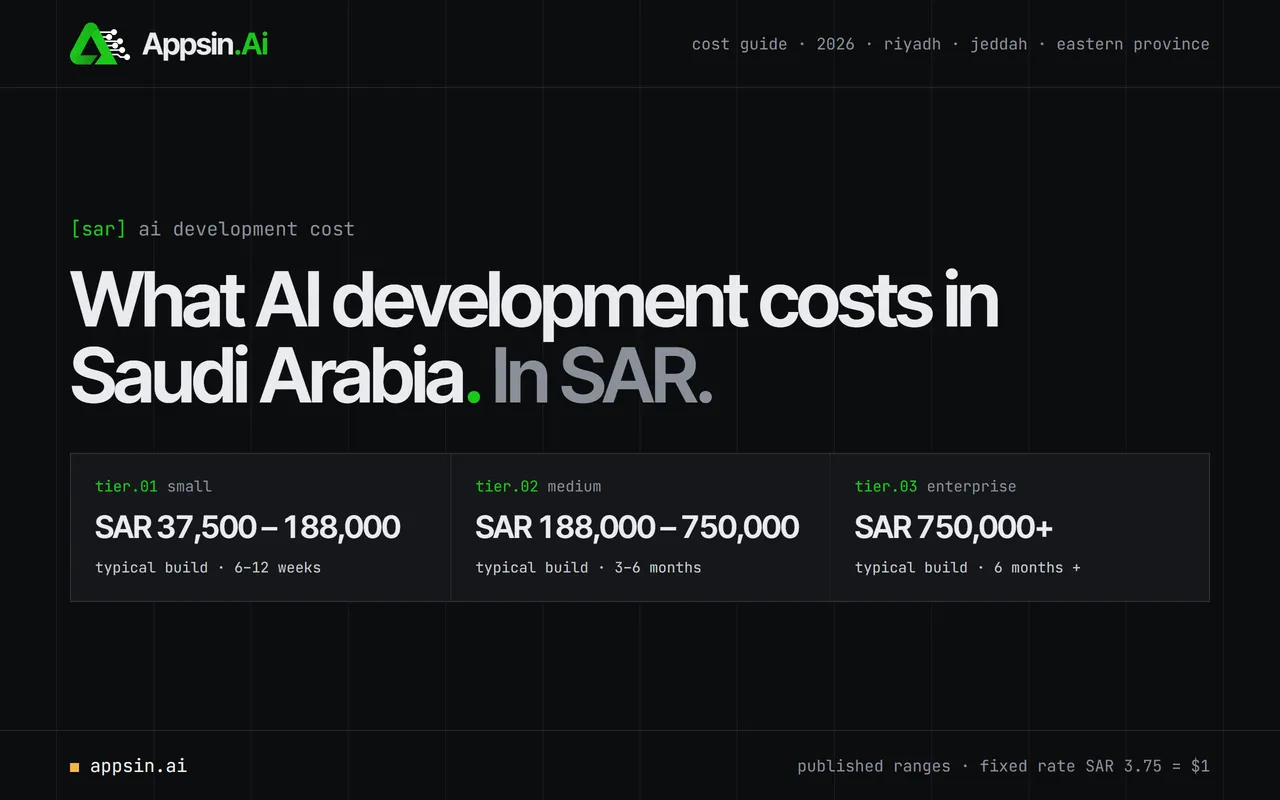
Cost: What are the development, infrastructure, maintenance, and model usage costs?
ROI: What measurable business outcome should the project deliver?
Addressing these questions early can significantly improve the chances of a successful AI implementation.
Choosing the Right AI Consulting Company for Your Business
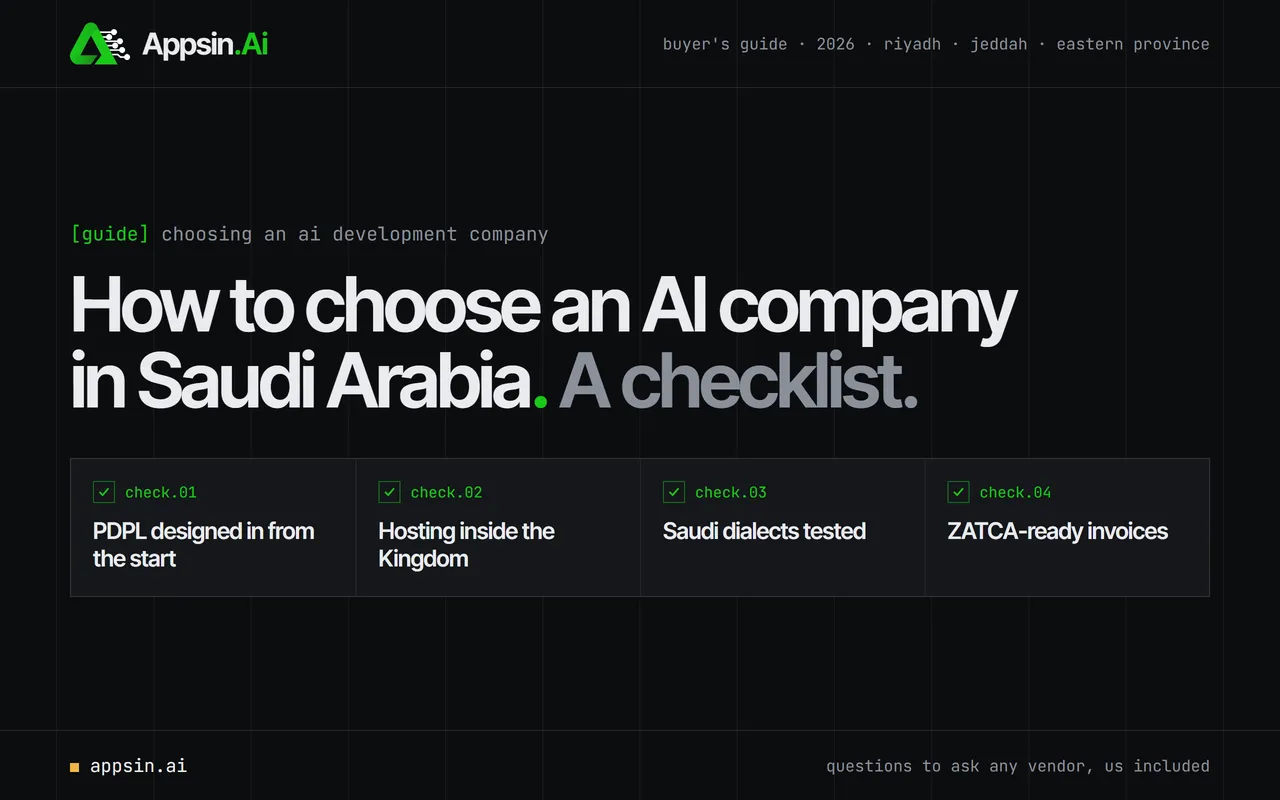
Selecting the right consulting company is an important part of an AI transformation strategy. Businesses should evaluate a provider based on:
- AI and machine learning expertise
- Industry knowledge
- Previous AI implementations
- Data engineering capabilities
- Generative AI experience
- Integration expertise
- Security practices
- Scalability approach
- Post-deployment support
- Ability to understand business objectives
A strong consulting partner should be able to explain complex AI concepts in business terms and connect technology decisions with measurable outcomes.
The Future of AI Consulting
AI adoption is moving from isolated experiments toward organization-wide transformation. Businesses are increasingly looking at AI as a long-term capability rather than a standalone technology project.
Future AI strategies are likely to combine generative AI, machine learning, AI agents, automation, predictive analytics, and enterprise data platforms. Organizations that establish a strong foundation today can adapt more effectively as AI technologies continue to evolve.
For companies planning custom AI solutions, AI ML Development Services can provide the technical foundation required to turn AI strategies into production-ready applications.
Conclusion
AI can create significant opportunities for businesses, but technology alone does not guarantee success. Organizations need a clear understanding of their goals, data, processes, technology environment, and expected outcomes.
The right AI consulting services can help businesses identify high-value opportunities, develop a practical roadmap, select appropriate technologies, and move from AI experimentation to measurable business results.
Whether the goal is automation, predictive analytics, generative AI, intelligent customer experiences, or enterprise transformation, a structured AI strategy can help organizations adopt artificial intelligence with greater confidence and purpose.