

Machine Learning Solutions: Turning Business Data Into Intelligent Decisions
- Author: Arun Kumar
- Posted On: August 27, 2026
- Post Comments: 0
| Getting your Trinity Audio player ready... |
Table of Contents
ToggleMachine learning is no longer limited to research labs or large technology companies. Businesses across industries are using machine learning solutions to automate repetitive processes, understand customer behavior, improve forecasting, detect risks, and make faster decisions.
As data continues to grow, organizations need more than traditional software to turn that information into business value. Machine learning can identify patterns within large datasets, learn from historical information, and continuously improve predictions as new data becomes available.
What Are Machine Learning Solutions?
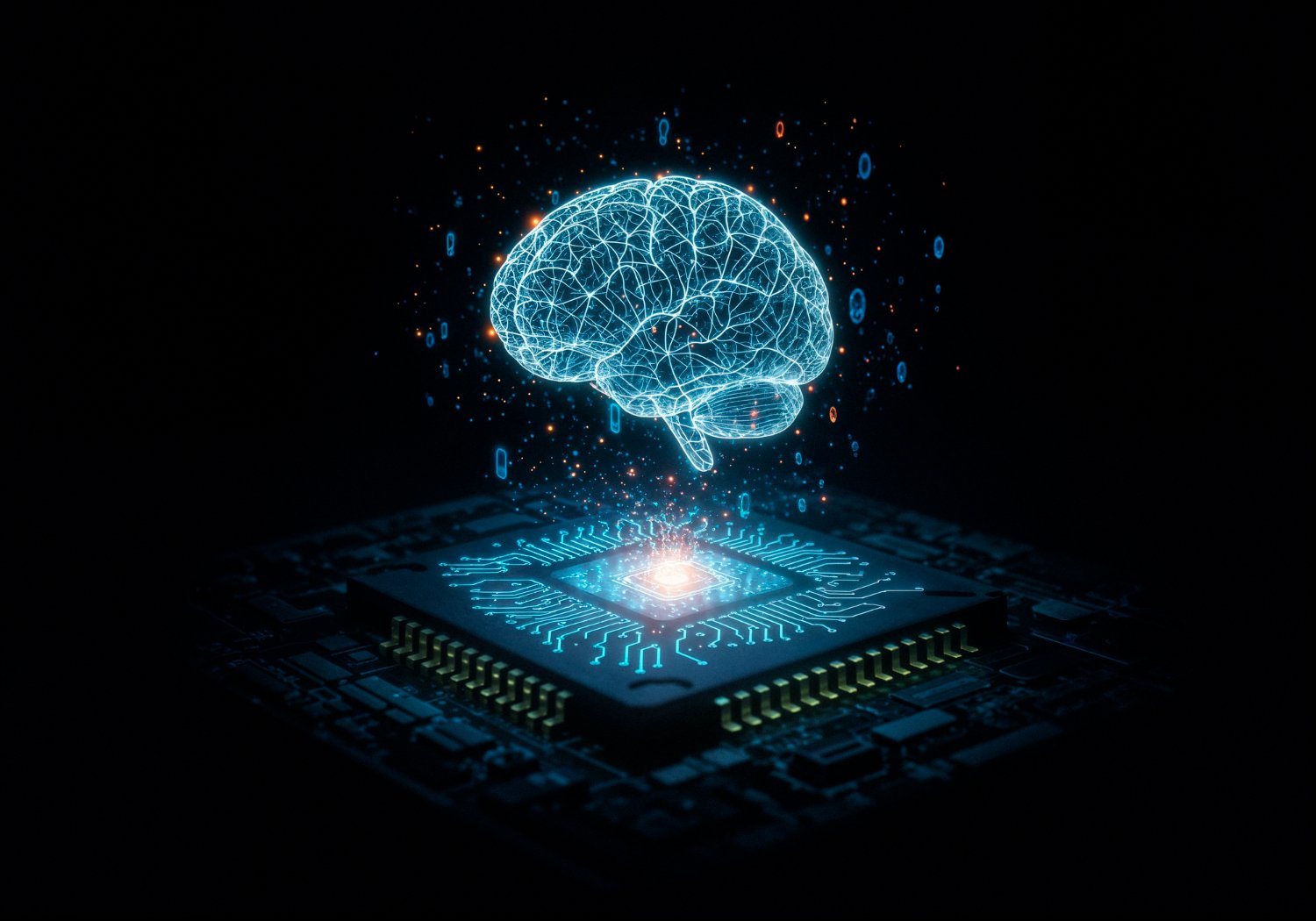
Machine learning solutions are software systems that use algorithms and data to identify patterns, generate predictions, automate decisions, or improve business processes. Unlike conventional applications that depend entirely on predefined rules, machine learning models can learn from historical and real-time data.
These solutions can be designed around specific business requirements, such as:
Predictive analytics and forecasting
Customer behavior analysis
Recommendation engines
Fraud and anomaly detection
Intelligent document processing
Demand forecasting
Image and video analysis
Natural language processing
Predictive maintenance
Process automation
The objective is not simply to introduce AI into an organization. It is to solve measurable business problems with technology that can deliver long-term value.
Why Businesses Are Investing in Machine Learning
Modern organizations generate information from websites, applications, transactions, connected devices, customer interactions, and internal systems. Analyzing all of this information manually can be slow and inefficient.
Machine learning helps businesses transform large datasets into actionable intelligence.
1. Better Business Forecasting
Machine learning models can analyze historical sales, market trends, seasonal patterns, and customer behavior to support more accurate forecasting.
Businesses can use these insights to estimate demand, optimize inventory, plan resources, and make informed strategic decisions.
2. Intelligent Automation
Repetitive tasks can consume significant employee time. Machine learning can automate activities such as classification, data extraction, document analysis, customer segmentation, and basic decision-making.
This allows teams to spend more time on strategic and creative work.
3. Personalized Customer Experiences
Machine learning can analyze customer preferences, browsing behavior, purchase history, and interactions to create personalized experiences.
Recommendation engines, targeted content, intelligent search, and personalized offers are common examples of machine learning-powered experiences.
4. Improved Risk Detection
Financial institutions, e-commerce businesses, insurance providers, and other organizations can use machine learning to identify unusual patterns.
Models can help detect potentially fraudulent transactions, suspicious activity, operational anomalies, and other risks much faster than manual analysis.
5. Operational Efficiency
Machine learning can help organizations identify inefficiencies across business operations. Predictive maintenance, intelligent scheduling, demand planning, and process optimization can reduce unnecessary costs while improving productivity.
Key Types of Machine Learning Solutions
Different business challenges require different approaches. A successful solution begins with selecting the appropriate machine learning technique.
Predictive Analytics
Predictive models use historical and current data to estimate future outcomes. Businesses can apply them to sales forecasting, customer churn prediction, demand planning, and risk assessment.
Recommendation Systems
Recommendation engines analyze user behavior and preferences to suggest relevant products, services, content, or actions.
They are particularly valuable for e-commerce, entertainment, media, and digital platforms.
Natural Language Processing
Natural language processing enables software to understand and process human language. Applications include intelligent chatbots, sentiment analysis, text classification, document summarization, and automated customer support.
Computer Vision
Computer vision enables machines to interpret images and videos. Businesses can use it for quality inspection, object detection, facial analysis, document processing, medical imaging, and security applications.
Anomaly Detection
Anomaly detection identifies unusual behavior within datasets. It can be used to monitor transactions, machinery, networks, applications, and operational processes.
Predictive Maintenance
Manufacturing and industrial organizations can analyze equipment data to identify signs of potential failure before a breakdown occurs. This can reduce downtime and improve maintenance planning.
How AI ML Development Services Support Machine Learning Projects
Implementing machine learning successfully requires more than developing an algorithm. Organizations need reliable data pipelines, appropriate model architectures, testing processes, deployment infrastructure, and continuous monitoring.
AI ML Development Services can support businesses throughout this lifecycle, from identifying the right use case to deploying and maintaining production-ready machine learning applications.
A typical development process includes:
Business Discovery: Define the business challenge, expected outcomes, users, and measurable success criteria.
Data Collection: Gather relevant information from databases, applications, APIs, sensors, documents, and other sources.
Data Preparation: Clean, structure, transform, and validate the data before model development.
Model Development: Select suitable algorithms and train models using relevant datasets.
Testing and Validation: Evaluate accuracy, reliability, performance, and potential limitations.
Deployment: Integrate the trained model into the required application, platform, or business workflow.
Monitoring and Optimization: Track model performance and retrain or improve models as business conditions and data change.
This structured approach helps ensure that machine learning becomes a practical business capability rather than an isolated technology experiment.
Industries Using Machine Learning Solutions
Machine learning has applications across almost every major industry.
Healthcare
Healthcare organizations can use machine learning for medical image analysis, patient risk prediction, drug discovery, administrative automation, and personalized treatment support.
Retail and E-Commerce
Retailers can apply machine learning to demand forecasting, product recommendations, customer segmentation, pricing optimization, and inventory management.
Manufacturing
Manufacturers can use machine learning for predictive maintenance, visual quality inspection, production optimization, and equipment monitoring.
Finance
Banks and financial institutions can use machine learning for fraud detection, credit risk analysis, customer insights, automated document processing, and financial forecasting.
Automotive
Machine learning supports applications such as vehicle diagnostics, driver behavior analysis, predictive maintenance, intelligent navigation, demand forecasting, and connected vehicle services.
Logistics and Transportation
Transportation companies can use machine learning for route optimization, delivery forecasting, fleet monitoring, demand prediction, and operational planning.
Benefits of Custom Machine Learning Development
Off-the-shelf AI tools may work for general requirements, but businesses with specialized workflows often need customized solutions.
Custom development can provide:
Solutions aligned with specific business processes
Integration with existing enterprise software
Greater control over data and models
Flexible scalability
Industry-specific model training
Improved workflow automation
Custom dashboards and analytics
Continuous model improvement
A customized approach can also make it easier to adapt the solution as the organization grows.
Challenges to Consider
Machine learning offers significant opportunities, but organizations should plan carefully before implementation.
Data Quality: Poor-quality or incomplete data can negatively affect model performance.
Integration: Connecting machine learning models with existing systems may require additional engineering.
Scalability: A model that works in a testing environment must be designed to handle real-world workloads.
Security and Privacy: Sensitive business and customer data should be protected throughout the development and deployment lifecycle.
Model Monitoring: Model performance can change when real-world data changes. Continuous monitoring helps identify performance degradation.
Business Alignment: A technically impressive model may have limited value if it does not solve an important business problem.
How to Choose the Right Machine Learning Development Partner
The right technology partner should understand both machine learning and your business objectives. Before selecting a development company, consider its experience with:
Custom machine learning applications
Data engineering and model development
AI and ML integrations
Cloud deployment
MLOps and model monitoring
Industry-specific use cases
Enterprise software integration
Security and scalability
It is also useful to evaluate previous projects, technical expertise, development methodology, communication practices, and post-launch support.
The Future of Machine Learning Solutions
Machine learning is moving toward more intelligent, adaptive, and autonomous applications. The combination of machine learning with generative AI, large language models, computer vision, natural language processing, and AI agents is creating new opportunities for businesses.
Organizations can increasingly build systems that not only analyze information but also recommend actions, automate workflows, interact with users, and continuously learn from new data.
For businesses, the biggest opportunity is not simply adopting the latest AI technology. It is identifying where intelligent automation and predictive capabilities can create measurable improvements.
Conclusion
Machine learning solutions can help businesses transform complex data into useful insights, automate operational tasks, improve customer experiences, and support better decision-making.
With a clear strategy, quality data, appropriate technology, and continuous optimization, machine learning can become a valuable part of an organization’s digital transformation journey. Businesses that focus on practical use cases and measurable outcomes are better positioned to turn machine learning investments into sustainable competitive advantages.
For organizations planning a new AI initiative or modernizing an existing application, AI ML Development Services can provide the technical foundation required to design, build, integrate, and scale intelligent solutions around specific business objectives.


Subscribe Us
Join with our global community
Tags:
- Machine Learning

25
AugAI and ML Development