

Enterprise AI Integration: Challenges & Strategies for CTOs in 2026
- Author: Arun Kumar
- Posted On: January 12, 2026
- Post Comments: 0
| Getting your Trinity Audio player ready... |
Table of Contents
ToggleEnterprise AI integration has moved beyond experimentation and is now a strategic priority for CTOs in 2026. As enterprises adopt generative AI, machine learning, and intelligent automation at scale, integrating these technologies into existing systems has become both an opportunity and a challenge. Legacy infrastructure, data silos, governance risks, and security concerns often slow AI adoption in enterprises.
This blog explores the key challenges of enterprise AI integration and outlines proven strategies CTOs can use to build scalable, secure, and future-ready enterprise AI solutions.
What Is Enterprise AI Integration?
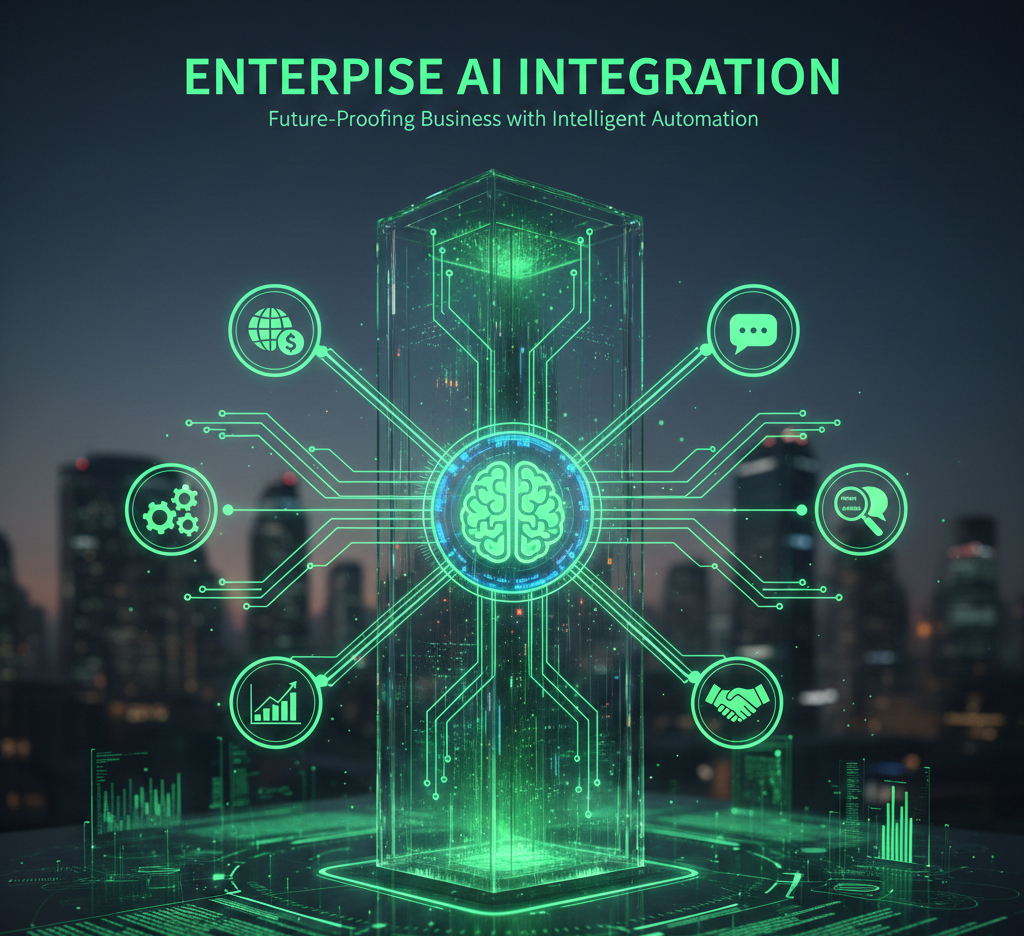
Enterprise AI integration is the process of embedding artificial intelligence capabilities into core enterprise systems such as ERP, CRM, HRMS, supply chain platforms, and data warehouses. It enables organizations to automate workflows, enhance decision-making, and deliver intelligent experiences across departments.
Unlike standalone AI tools, enterprise AI integration focuses on system-wide intelligence, interoperability, and long-term scalability aligned with business objectives.
Why Enterprise AI Integration Is Critical in 2026
In 2026, enterprises face growing pressure to deliver faster insights, hyper-personalized experiences, and operational efficiency. AI adoption in enterprises is accelerating due to:
Increased availability of generative AI and AI agents
Demand for real-time, data-driven decision-making
Competitive pressure to automate complex processes
Rising expectations for AI-driven customer and employee experiences
CTOs must align AI initiatives with a clear enterprise AI strategy to ensure sustainable business value
Key Challenges of Enterprise AI Integration
1. Legacy System Compatibility
Many enterprises rely on outdated systems that were not designed for AI system integration, making deployment complex and risky.
2. Data Silos and Poor Data Quality
Fragmented data across departments limits AI performance and increases bias, directly impacting AI adoption challenges.
3. AI Governance and Compliance
Without a structured AI governance framework, enterprises risk ethical violations, regulatory penalties, and lack of transparency.
4. Security and Privacy Risks
AI introduces new attack vectors such as data leakage, model poisoning, and unauthorized access.
5. Scalability and Performance
AI models must scale across geographies, business units, and workloads without performance degradation.
6. Talent and Skill Gaps
Shortage of skilled AI architects and engineers slows enterprise AI integration initiatives.
Enterprise AI Integration Strategies for CTOs
Adopt an API-First & Microservices Architecture
API-driven architectures enable seamless AI system integration with legacy platforms while minimizing disruption.
Build a Strong Data Foundation
Ensure data readiness through:
Data standardization and cleansing
Centralized data platforms
Role-based access controls
Implement an AI Governance Framework
A robust AI governance framework should include:
Ethical AI guidelines
Explainability and auditability
Regulatory compliance (GDPR, AI Act)
Model lifecycle management
Use Cloud-Native AI Platforms
Cloud-based enterprise AI solutions offer scalability, security, and faster deployment compared to on-premise models.
Phased AI Adoption Approach
Start with high-impact use cases and gradually expand across departments to reduce AI integration challenges.
Role of Generative AI in Enterprise AI Integration
Generative AI is reshaping enterprise AI strategy by enabling:
AI copilots for employees
Conversational interfaces for ERP and CRM systems
Automated content and code generation
Intelligent knowledge management
These capabilities accelerate AI adoption in enterprises and unlock new productivity gains across IT, HR, finance, and customer support.
Security Considerations for Enterprise AI
CTOs must address AI-specific security risks, including:
Prompt injection attacks
Data leakage through AI models
Unauthorized model access
Compliance violations
Best practices include encrypted data pipelines, secure model deployment, continuous monitoring, and zero-trust architectures.
Why Enterprise AI Consulting Matters
Enterprise AI consulting helps organizations design, implement, and scale AI initiatives effectively. Expert consultants assist with:
Enterprise AI strategy alignment
AI system integration planning
Governance and compliance setup
Long-term optimization and ROI measurement
Partnering with the right enterprise AI consulting firm reduces risk and accelerates transformation.
Future Trends in Enterprise AI Integration
Autonomous AI agents managing workflows
AI-driven decision intelligence platforms
Industry-specific enterprise AI solutions
Explainable and regulated AI by design
CTOs who plan for these trends will gain a lasting competitive advantage.
Conclusion
Enterprise AI integration in 2026 is no longer optional-it is a business imperative. While AI adoption challenges such as legacy systems, governance, and security remain significant, a clear enterprise AI strategy, strong data foundation, and scalable architecture can ensure success. CTOs who invest in responsible AI governance, cloud-native platforms, and expert enterprise AI consulting will lead their organizations into the next era of intelligent enterprise transformation.
FAQs
Enterprise AI integration is the process of embedding artificial intelligence technologies-such as machine learning, generative AI, and AI agents-into existing enterprise systems like ERP, CRM, HRMS, and data platforms to automate workflows, improve decision-making, and enhance scalability.
The major challenges include legacy system compatibility, data silos, AI governance, security risks, model scalability, regulatory compliance, and the shortage of skilled AI talent within enterprises.
CTOs can integrate AI with legacy systems using API-first architectures, middleware platforms, microservices, cloud-based AI services, and phased modernization strategies without disrupting existing business operations
Data readiness is critical. High-quality, well-structured, and governed data enables accurate AI models, reduces bias, improves real-time insights, and ensures enterprise-grade AI performance across departments.
Enterprises should implement AI governance frameworks covering data privacy, ethical AI use, explainability, compliance (GDPR, AI Act), model monitoring, and role-based access controls to ensure responsible AI adoption.
Generative AI accelerates enterprise AI adoption by enabling intelligent automation, AI copilots, conversational interfaces, code generation, and knowledge retrieval across business functions such as IT, HR, finance, and customer support.
Key security risks include data leakage, model poisoning, prompt injection, unauthorized access, and compliance violations. CTOs should use secure AI pipelines, encrypted data flows, and continuous monitoring to mitigate these risks.
The best strategy combines a clear AI roadmap, cloud-native infrastructure, scalable AI platforms, strong governance, cross-functional collaboration, and continuous model optimization aligned with business KPIs

