

Top AI Development Companies Transforming Your Business Today
- Author: Arun Kumar
- Posted On: February 4, 2026
- Post Comments: 0
| Getting your Trinity Audio player ready... |
Importance of AI in Business Transformation
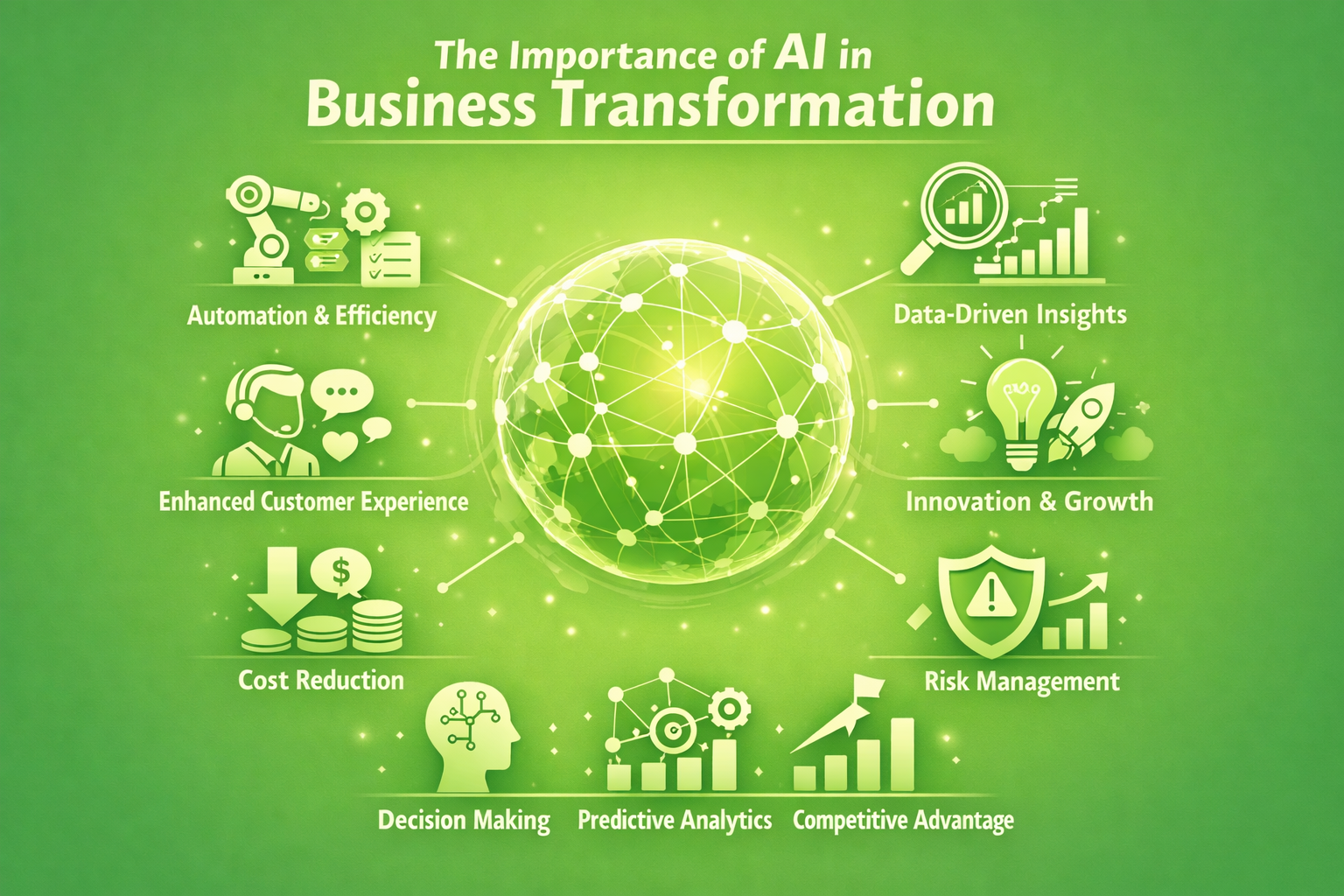
Artificial Intelligence (AI) is no longer a futuristic concept but an integral part of modern business operations. Companies across various industries are leveraging AI to streamline processes, enhance decision-making, and provide personalized customer experiences. The ability of AI to analyze vast datasets, identify patterns, and make predictions enables businesses to operate more efficiently and profitably. As a result, AI has become a key driver of business transformation, pushing organizations to innovate and stay competitive in an ever-evolving market.
The importance of AI in business transformation cannot be overstated. From automating mundane tasks to providing deep insights into customer behavior, AI has the potential to revolutionize every aspect of a business. For example, AI-powered chatbots can handle customer inquiries 24/7, improving customer service while freeing up human agents to focus on more complex issues. Similarly, AI algorithms can predict market trends, helping companies make informed decisions and stay ahead of their competitors. By integrating AI into their operations, businesses can achieve greater efficiency, reduce costs, and enhance their overall performance.
Moreover, AI is also driving innovation in product development and service delivery. Companies are using AI to create new products and services that meet the evolving needs of their customers. For instance, AI-powered recommendation engines can suggest personalized products to customers, increasing sales and customer satisfaction. Additionally, AI can help businesses identify new market opportunities and develop strategies to capitalize on them. In short, AI is transforming the way businesses operate, enabling them to deliver better value to their customers and achieve sustainable growth.
Criteria for Choosing an AI Development Company
Choosing the right AI development company is crucial for the successful implementation of AI solutions in your business. There are several factors to consider when selecting an AI development partner. Firstly, it is important to assess the company’s expertise and experience in AI development. Look for a company that has a proven track record of delivering successful AI projects and has a deep understanding of the latest AI technologies and trends. Additionally, consider the company’s industry-specific experience, as this can provide valuable insights and solutions tailored to your business needs.
Another important criterion is the company’s approach to AI development. A good AI development company should adopt a collaborative approach, working closely with your team to understand your business goals and challenges. They should also have a clear and transparent development process, with regular updates and feedback loops to ensure the project stays on track. Additionally, consider the company’s commitment to ethical AI practices, as this is crucial for building trust and ensuring the responsible use of AI.
Lastly, consider the company’s support and maintenance services. AI solutions require ongoing monitoring and updates to ensure they continue to deliver optimal performance. A good AI development company should provide comprehensive support and maintenance services, including regular performance assessments, updates, and troubleshooting. Additionally, consider the company’s ability to scale the AI solution as your business grows. By considering these criteria, you can choose an AI development company that will help you achieve your business goals and drive successful AI implementation.
Top AI Development Companies to Consider
There are several top AI development companies that are making significant strides in transforming businesses across various industries. One such company is IBM Watson. Known for its advanced AI capabilities, IBM Watson offers a wide range of AI solutions, including natural language processing, machine learning, and computer vision. IBM Watson’s AI solutions have been successfully implemented in various industries, including healthcare, finance, and retail, helping businesses to improve decision-making, enhance customer experiences, and optimize operations.
Another leading AI development company is Google AI. Google AI is at the forefront of AI research and development, with a focus on advancing the state of the art in machine learning and artificial intelligence. Google’s AI solutions are used by businesses worldwide to solve complex problems, automate processes, and gain valuable insights. Google AI’s products, such as TensorFlow and Google Cloud AI, provide powerful tools for developing and deploying AI applications, making it a top choice for businesses looking to leverage AI.
Microsoft Azure AI is another top AI development company that offers a comprehensive suite of AI services and tools. Microsoft Azure AI provides a range of AI capabilities, including machine learning, cognitive services, and bot services, enabling businesses to build intelligent applications and solutions. Microsoft’s AI solutions are designed to integrate seamlessly with existing systems and infrastructure, making it easier for businesses to adopt and scale AI. With its robust AI platform and extensive support resources, Microsoft Azure AI is a valuable partner for businesses looking to transform their operations with AI.
Case Studies: Successful AI Implementations
Case studies of successful AI implementations provide valuable insights into how businesses can leverage AI to achieve their goals. One notable example is the use of AI by Netflix to enhance its recommendation engine. By leveraging machine learning algorithms, Netflix is able to analyze user data and make personalized content recommendations. This has not only improved the user experience but also increased viewer engagement and retention. Netflix’s AI-powered recommendation engine is a prime example of how AI can drive business growth by delivering personalized experiences to customers.
In the healthcare industry, Mayo Clinic has successfully implemented AI to improve patient care. Mayo Clinic uses AI-powered tools to analyze medical records and predict patient outcomes. This enables doctors to make more informed decisions and provide personalized treatment plans. Additionally, Mayo Clinic uses AI to identify potential health issues before they become serious, allowing for early intervention and better patient outcomes. Mayo Clinic’s use of AI demonstrates the potential of AI to transform healthcare by improving diagnostics, treatment, and patient care.
Another successful AI implementation is seen in the retail industry with the use of AI by Walmart. Walmart uses AI to optimize its supply chain and inventory management. By analyzing data from various sources, including sales, weather, and social media, Walmart’s AI system can predict demand and optimize inventory levels. This has helped Walmart reduce costs, improve efficiency, and ensure that products are always available for customers. Walmart’s use of AI in supply chain management highlights the importance of AI in driving operational efficiency and customer satisfaction.
Industry-Specific AI Solutions
Different industries have unique needs and challenges, and AI solutions can be tailored to address these specific requirements. In the finance industry, AI is being used to detect fraud, automate trading, and provide personalized financial advice. For example, banks are using AI-powered systems to analyze transaction data and identify suspicious activities in real-time. This helps prevent fraud and protect customers’ assets. Additionally, AI-powered chatbots are being used by financial institutions to provide personalized financial advice and support to customers, enhancing the overall customer experience.
In the manufacturing industry, AI is being used to optimize production processes and improve quality control. AI-powered systems can analyze data from sensors and machines to identify patterns and predict equipment failures. This enables manufacturers to perform predictive maintenance and avoid costly downtime. Additionally, AI is being used to improve quality control by analyzing images and identifying defects in products. By leveraging AI, manufacturers can improve efficiency, reduce costs, and ensure high-quality products.
The retail industry is also benefiting from AI solutions. AI-powered systems are being used to analyze customer data and provide personalized shopping experiences. For example, AI-powered recommendation engines can suggest products based on customers’ preferences and purchase history, increasing sales and customer satisfaction. Additionally, AI is being used to optimize inventory management and supply chain operations, ensuring that products are available when and where customers need them. By leveraging AI, retailers can enhance the customer experience, improve efficiency, and drive sales.
Unborn Trends in AI Development
The field of AI is constantly evolving, and several arising trends are shaping the future of AI development. One similar trend is the rise of resolvable AI. As AI systems come more complex, there’s a growing need for translucency and interpretability. resolvable AI aims to give perceptivity into how AI systems make opinions, enabling druggies to understand and trust AI- driven issues. This is particularly important in diligence like healthcare and finance, where opinions can have significant consequences. By making AI more transparent and interpretable, resolvable AI can help make trust and grease the wider relinquishment of AI.
Another arising trend is the integration of AI with other advanced technologies, similar as the Internet of effects( IoT) and blockchain. The combination of AI and IoT can enable the creation of intelligent systems that can dissect data from connected bias and make real- time opinions. For illustration, in smart metropolises, AI- powered systems can dissect data from detectors to optimize business inflow and reduce traffic. also, the integration of AI and blockchain can enhance security and translucency in colorful operations, similar as force chain operation and fiscal deals. By using the solidarity between these technologies, businesses can develop innovative results and drive digital metamorphosis.
also, there’s a growing focus on ethical AI development. As AI systems come more pervasive, there’s a need to insure that they’re developed and used responsibly. This includes addressing issues similar as bias, sequestration, and responsibility. Organizations are decreasingly espousing ethical AI fabrics and guidelines to insure that their AI systems are fair, transparent, and responsible. By prioritizing ethical AI development, businesses can make trust with their guests and stakeholders and insure the responsible use of AI.
Challenges in AI Relinquishment and How to Overcome Them
Despite the multitudinous benefits of AI, businesses face several challenges in espousing AI results. One of the main challenges is the lack of professed gift. Developing and enforcing AI results requires moxie in areas similar as machine literacy, data wisdom, and software engineering. still, there’s a deficit of professed professionals in these fields, making it delicate for businesses to make and emplace AI systems. To overcome this challenge, businesses can invest in training and upskilling their being pool, as well as unite with AI development companies and academic institutions to pierce the necessary moxie.
Another challenge is the integration of AI with being systems and processes. numerous businesses have heritage systems that are n’t designed to work with AI technologies. Integrating AI with these systems can be complex and time- consuming. To address this challenge, businesses can borrow a phased approach to AI perpetration, starting with airman systems and gradationally spanning up. also, businesses can work AI platforms and tools that are designed to integrate seamlessly with being systems, making the transition to AI smoother and more effective.
Data quality and availability are also significant challenges in AI relinquishment. AI systems calculate on large quantities of high- quality data to serve effectively. still, numerous businesses struggle with data silos, poor data quality, and limited access to applicable data. To overcome these challenges, businesses can apply data governance fabrics to insure data quality and availability. This includes establishing data operation practices, homogenizing data formats, and enforcing data integration tools. By addressing data challenges, businesses can insure that their AI systems have access to the high- quality data demanded to deliver accurate and dependable results.
The Role of AI in Enhancing Customer Experience
AI is playing a crucial role in enhancing customer experience by providing personalized and efficient interactions. One of the most common applications of AI in customer experience is through AI-powered chatbots. These chatbots can handle customer inquiries 24/7, providing instant responses and resolving issues quickly. By leveraging natural language processing and machine learning, AI-powered chatbots can understand and respond to customer queries in a human-like manner. This not only improves customer satisfaction but also reduces the workload on human customer service agents, allowing them to focus on more complex tasks.
AI is also being used to provide personalized recommendations and offers to customers. By analyzing customer data, such as purchase history, browsing behavior, and preferences, AI systems can generate personalized recommendations that are tailored to each customer’s needs and interests. This enhances the customer experience by providing relevant and timely suggestions, increasing the likelihood of purchases and customer loyalty. Additionally, AI can be used to create personalized marketing campaigns, targeting customers with offers and promotions that are most likely to appeal to them.
Moreover, AI is being used to improve the overall customer journey by predicting and addressing potential issues before they arise. For example, AI-powered systems can analyze customer interactions and identify patterns that indicate dissatisfaction or potential churn. This allows businesses to proactively address customer concerns and take corrective actions to improve the customer experience. By leveraging AI to enhance customer experience, businesses can build stronger relationships with their customers, increase customer satisfaction, and drive long-term loyalty.
Conclusion: Making the Right Choice for Your Business
In conclusion, AI has the potential to transform businesses across various industries by enhancing efficiency, driving innovation, and improving customer experiences. However, the successful implementation of AI requires careful consideration and planning. Choosing the right AI development company is crucial for achieving your business goals and driving successful AI adoption. By considering factors such as expertise, approach, and support services, you can select an AI development partner that will help you harness the power of AI.
As seen in the case studies, successful AI implementations can lead to significant business benefits, including increased efficiency, improved decision-making, and enhanced customer satisfaction. Additionally, industry-specific AI solutions can address unique challenges and requirements, enabling businesses to achieve their goals. The future of AI development is promising, with emerging trends such as explainable AI, integration with other advanced technologies, and ethical AI practices shaping the landscape.
While there are challenges in AI adoption, including the lack of skilled talent, integration with existing systems, and data quality, these can be overcome with the right strategies and support. By leveraging AI to enhance customer experience, businesses can build stronger relationships with their customers and drive long-term growth. Ultimately, making the right choice for your business involves selecting an AI development partner that understands your needs and can deliver innovative and effective AI solutions.

